Serving Suffolk, VA & nearby
(757) 384-2217
Suffolk, VA

Garage Door Spring Repair for Franklin, VA Homes

Franklin homes mostly went up around 1966, meaning standard single torsion spring setups that are 50+ years old. We travel from Suffolk to fix or replace them.

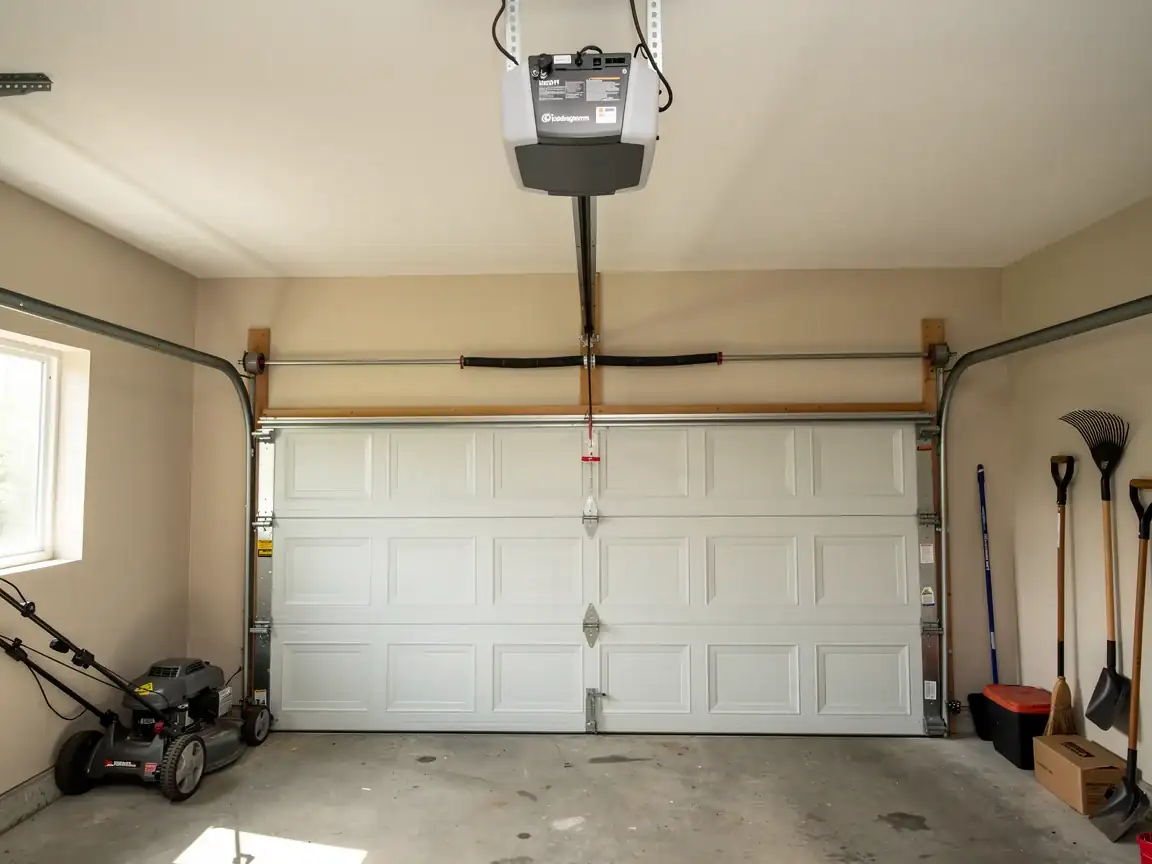
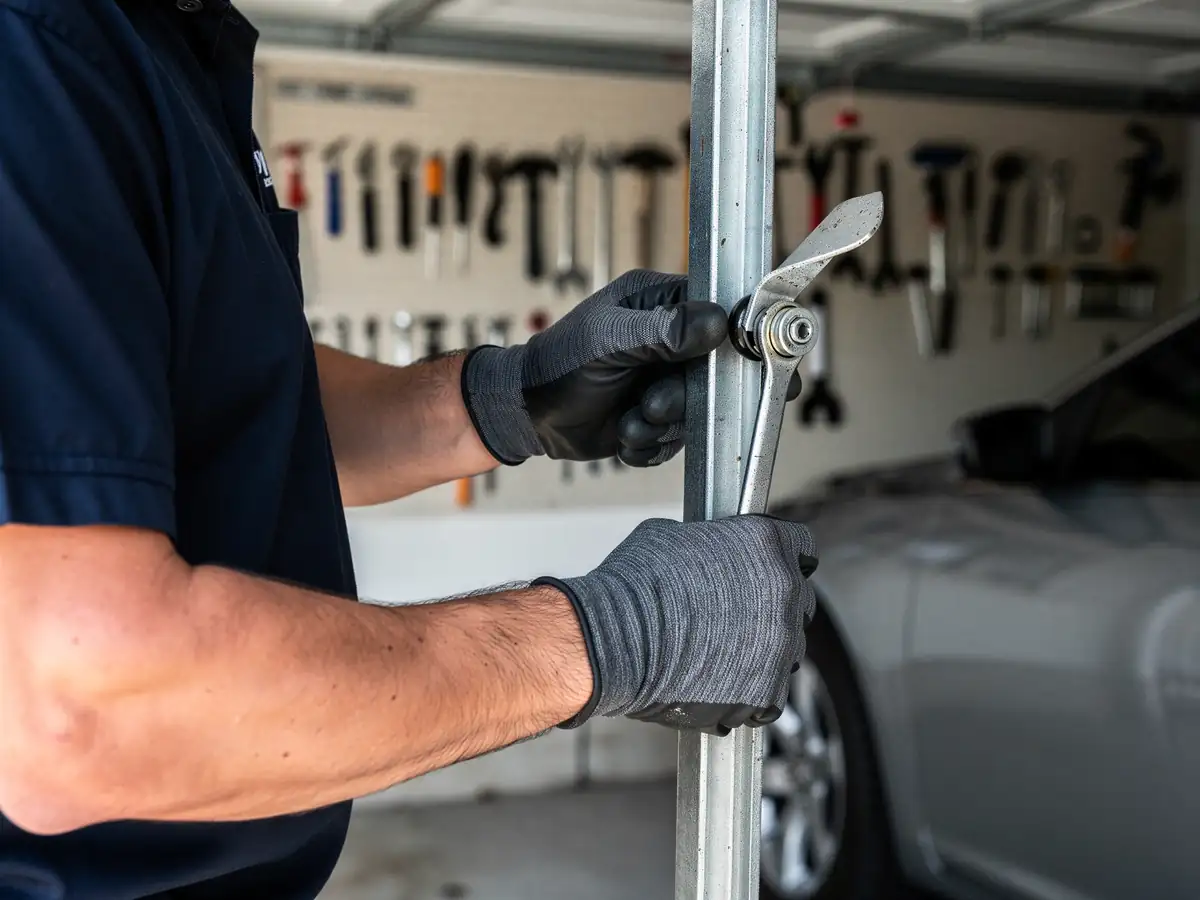
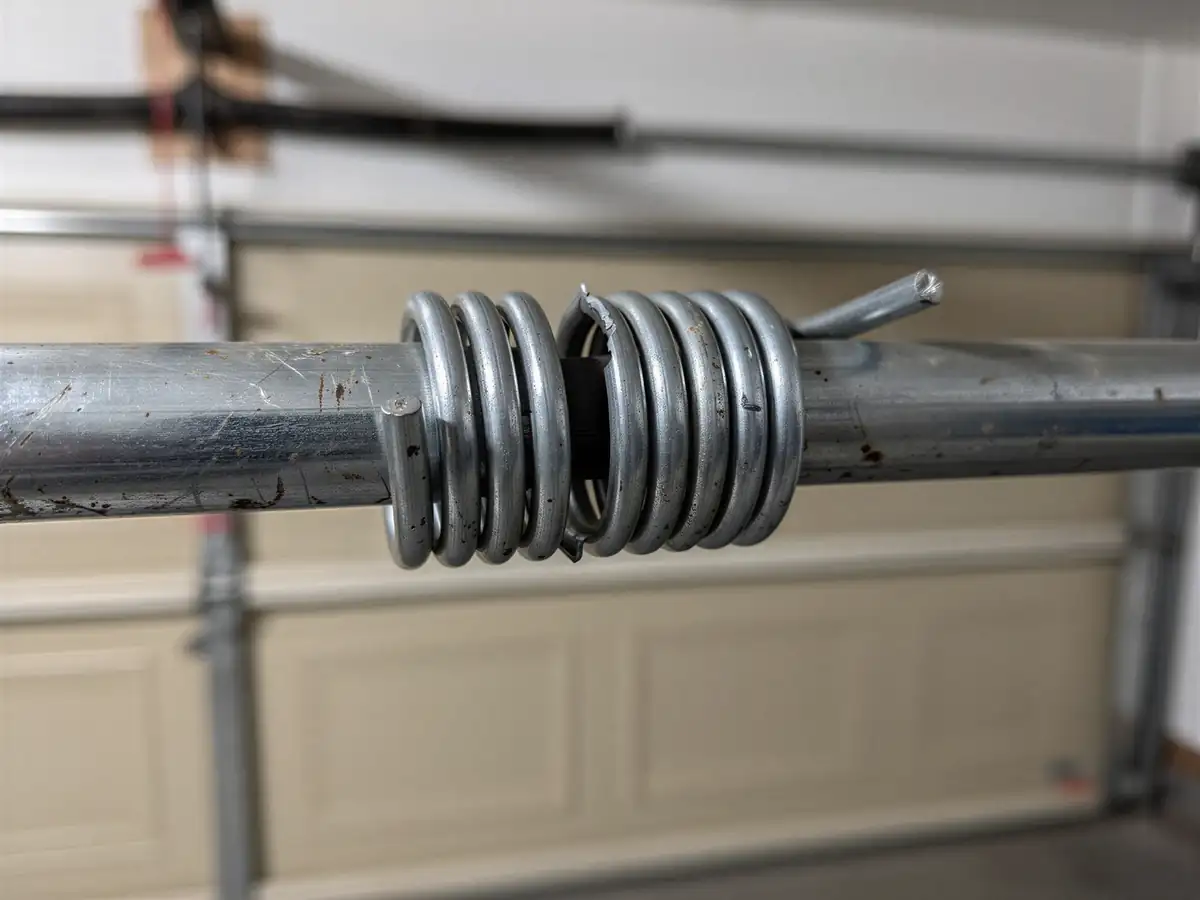
A broken torsion spring is on a metal rod in front of a garage door.
Suffolk, VA
8 services
3 service areas
Diagnosis first, then the fix

What You Pay

We can't quote a flat price without knowing your spring type and door weight, and we won't pretend otherwise. What we can tell you is what drives the number in a town like Franklin: most houses here went up around 1966, which means a lot of doors are still running the single torsion spring setup that was standard when the neighborhood was built. That's a different repair than the double-spring systems common in homes built twenty or thirty years later. Older single-spring doors often need the whole shaft and bearing plates inspected, not just the spring, because the rest of the hardware has usually logged the same decades of cycles. Franklin sits about 17 miles from our Suffolk shop, so travel is part of the job - we don't keep a branch out here, we run a truck out for the call. If your door is original to a 1960s build, expect the tech to price the spring plus a look at the cable drums and end bearings, since replacing just the spring on hardware that age sometimes means doing the job twice. For the general run-down on how we handle spring calls across the area, see our Suffolk spring repair page.

Parts We Carry

For a town where the housing stock centers on 1966, the springs we see most are standard torsion, wound for the lighter single-layer steel or wood doors that were common before insulated sectional doors took over later in the stock's build-out. We carry a range of torsion spring sizes on the truck, sized by wire gauge, coil diameter, and length, because a 1966-era door and a door from the later end of the area's building years (stock here runs into the early 1990s in parts of the wider service area) are not interchangeable parts. We also stock standard lift cables, drum sets, and center bearings, since those wear out on the same timeline as the spring on a door this old. What we don't carry on the truck is obsolete extension-spring side hardware from doors that were never upgraded - if your garage still has that setup, the tech may need to order a part, which means a second trip.

Doing It Yourself

A torsion spring is wound under enough tension to break a bone or worse if the winding bars slip, and that doesn't change because the house is fifty years old instead of twenty. If anything, older hardware is less forgiving - rusted set screws, a shaft that's corroded into the bearing plate, a spring that's been painted over and nobody can read the wind direction on it anymore. Extension springs (the kind that stretch along the horizontal tracks rather than coil over the header) are a different animal and some homeowners think they're safer to handle. They're not, and they're also less common on doors from this build era, so if you've got them, something was changed from original at some point and you may not know what else came with it. The honest answer: don't do this one yourself. Tightening hinges or lubricating rollers, fine. Touching a wound spring, no.

What the Repair Takes

On a straightforward single torsion spring swap, the tech unwinds the old spring with winding bars, pulls it off the shaft, checks the shaft, bearings, and cable drums for wear consistent with the door's age, and winds in the replacement sized to the door's weight. On a 1966-era door, that inspection step matters more than on newer stock, because the drums and bearings are usually original too and often need replacing in the same visit rather than coming back for them later. We travel from Suffolk, about 17 miles each way, so the appointment accounts for that drive - we don't keep parts or a crew stationed in Franklin itself. If the door has been modified from its original hardware at some point (extension springs added, a different opener bolted on), the tech will flag that before starting rather than assume the door matches what's typical for a house this age.

What Can Go Wrong

The biggest issue on older single-spring doors isn't the spring itself, it's everything around it that's the same age and hasn't been touched. Bearing plates seize, cable drums crack, and the shaft can be bent just enough that a new spring still won't sit right. Cold-weather cycling plays into this too - this area sits in a moderate cold climate band, and steel springs and cables that go through repeated winter contraction and summer expansion over fifty-plus years fatigue faster than the same parts would in a milder zone. We also see doors where a previous repair swapped in a spring that doesn't match the door's actual weight, which either burns out the opener or leaves the door hard to lift by hand - something more likely on a house old enough to have had several owners and several quick fixes over the decades.
How it works

From “it’s stuck” to “it’s fixed”

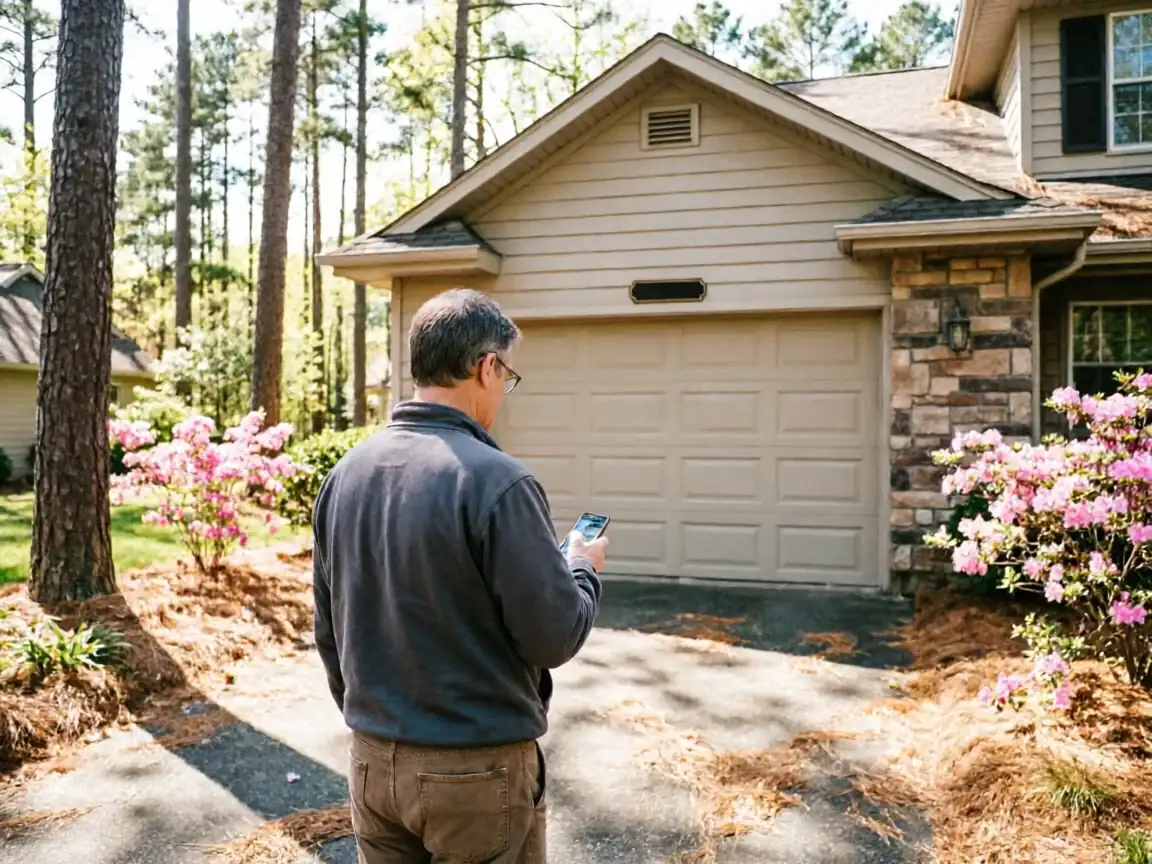
A man stands in a driveway looking at his phone in front of a garage door.

Tell us what’s wrong

Describe the symptom - won’t open, loud bang, opener runs but the door won’t move.

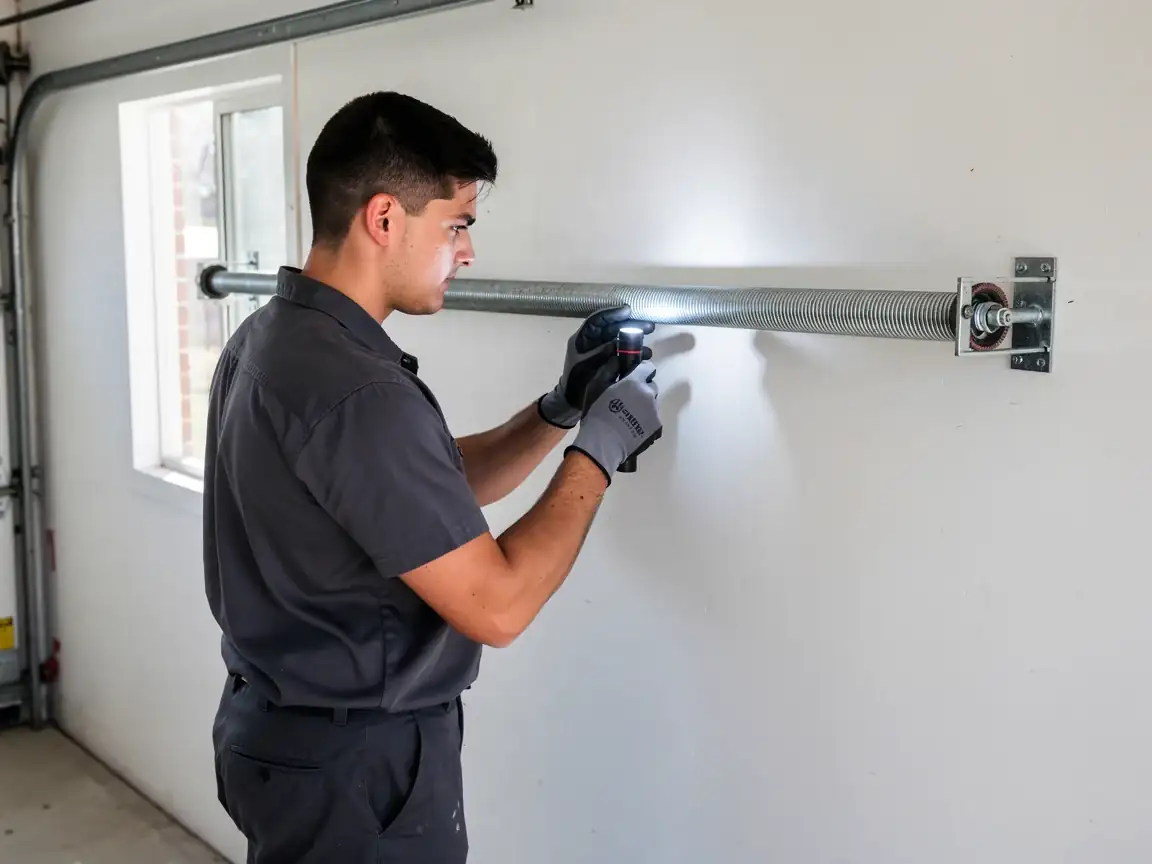
A technician shines a flashlight on a garage door torsion spring.

On-site diagnosis

A technician tests the door under power and by hand and finds what actually failed.

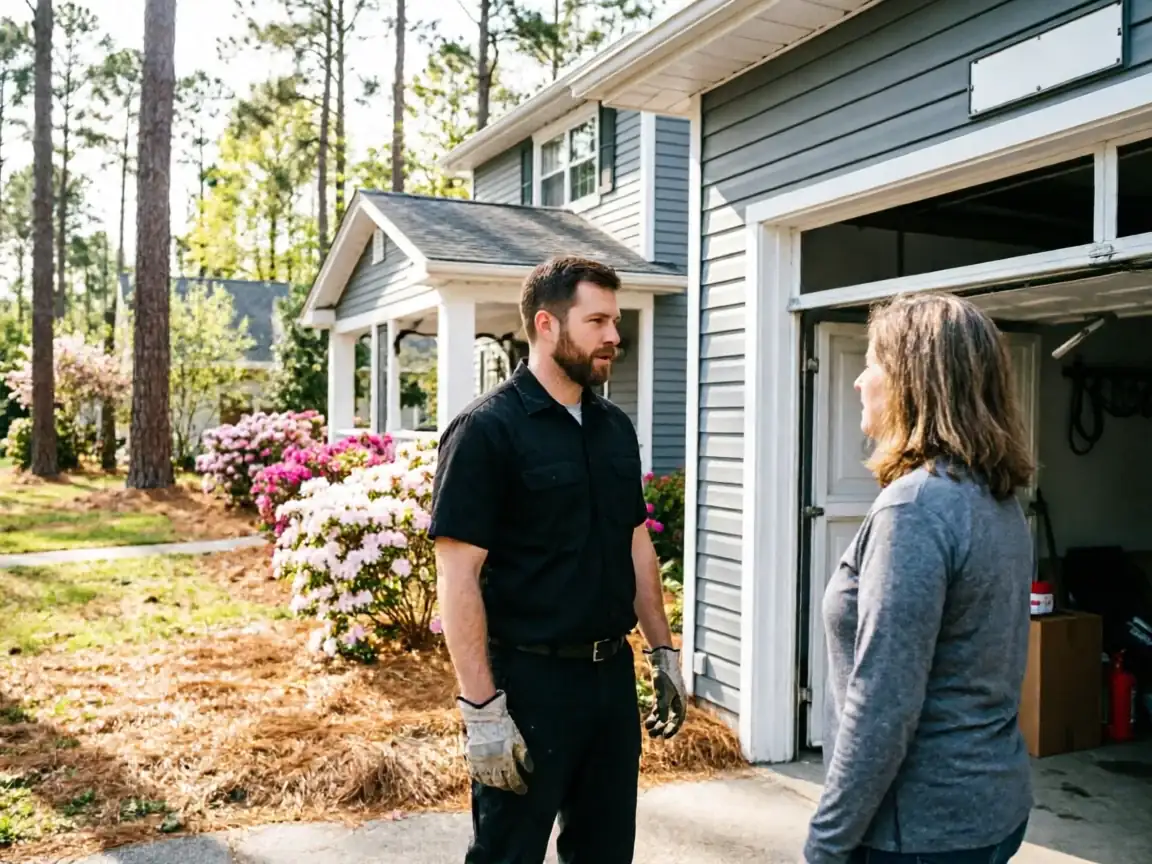
A technician in a black shirt talks to a woman in front of a garage.

Clear, up-front plan

You get the fix that’s needed and what drives the cost - before any work starts.

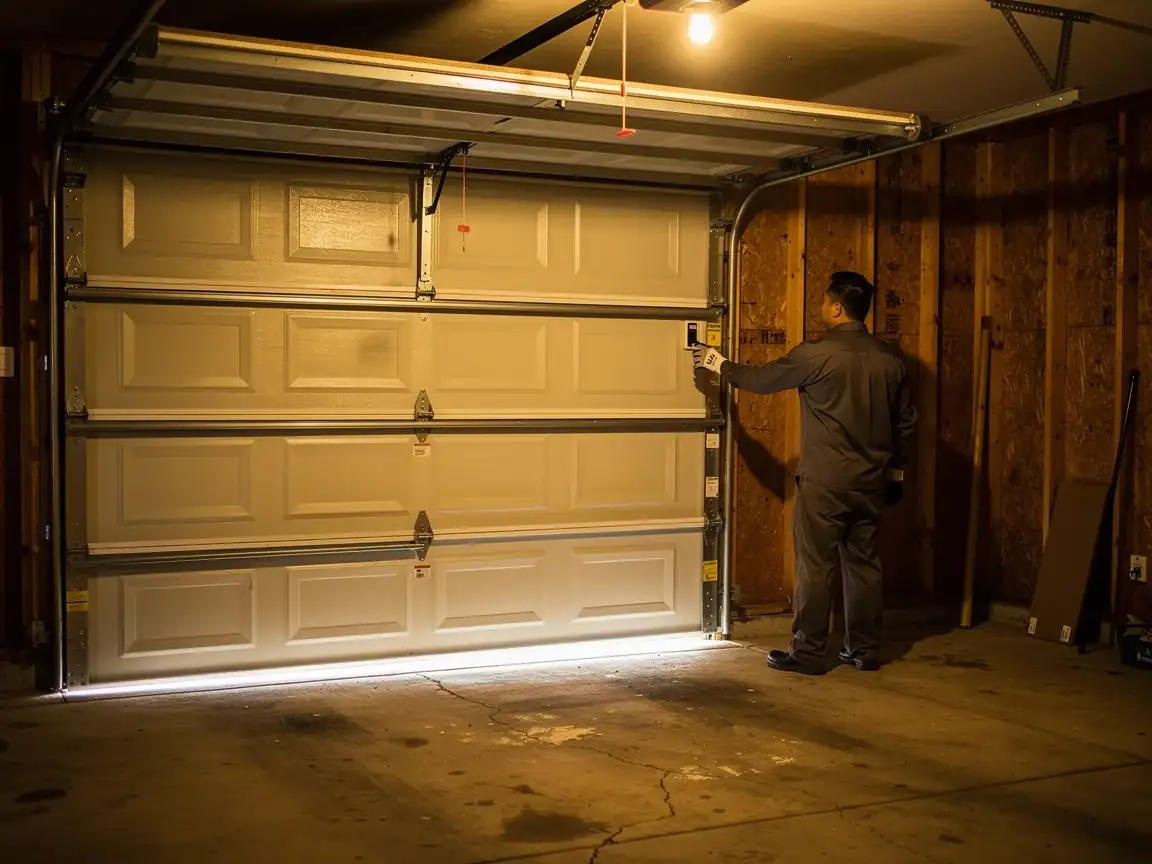
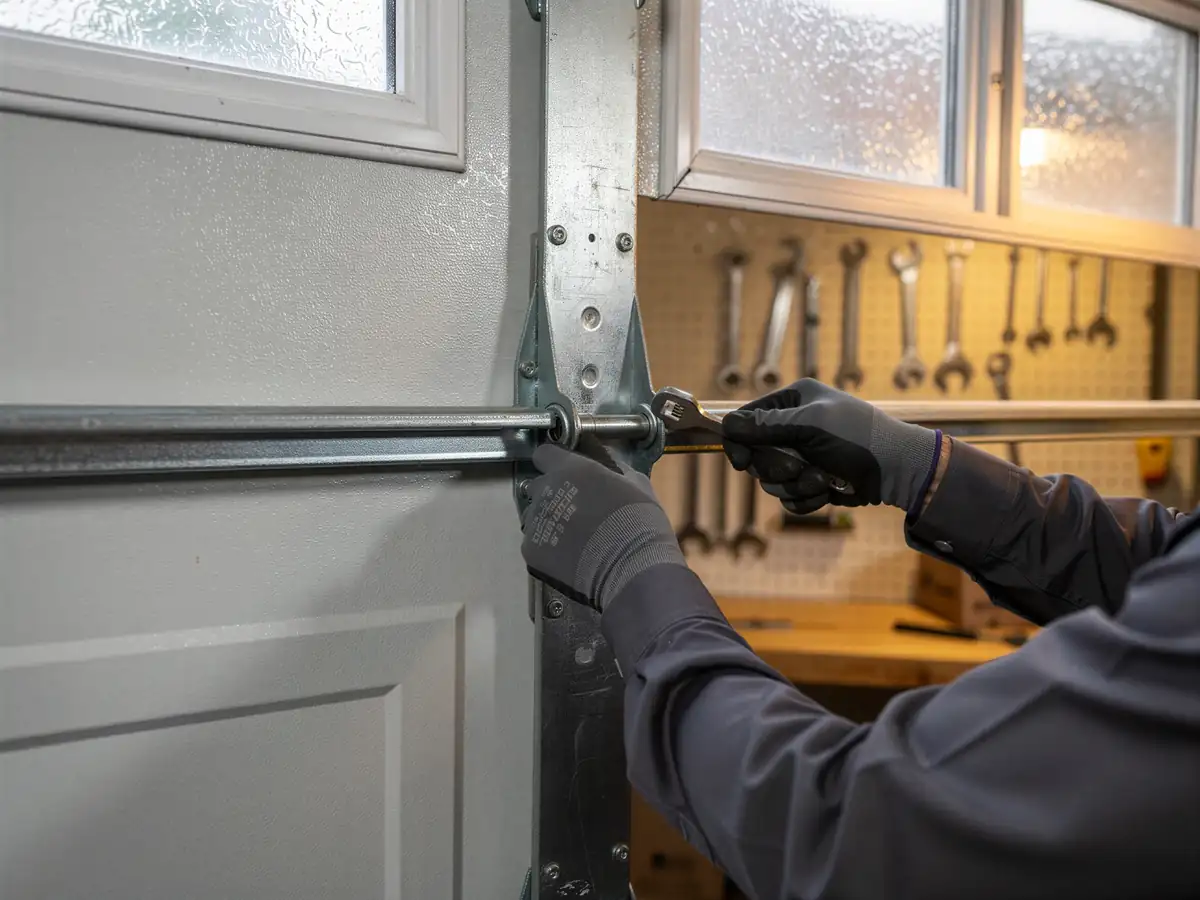
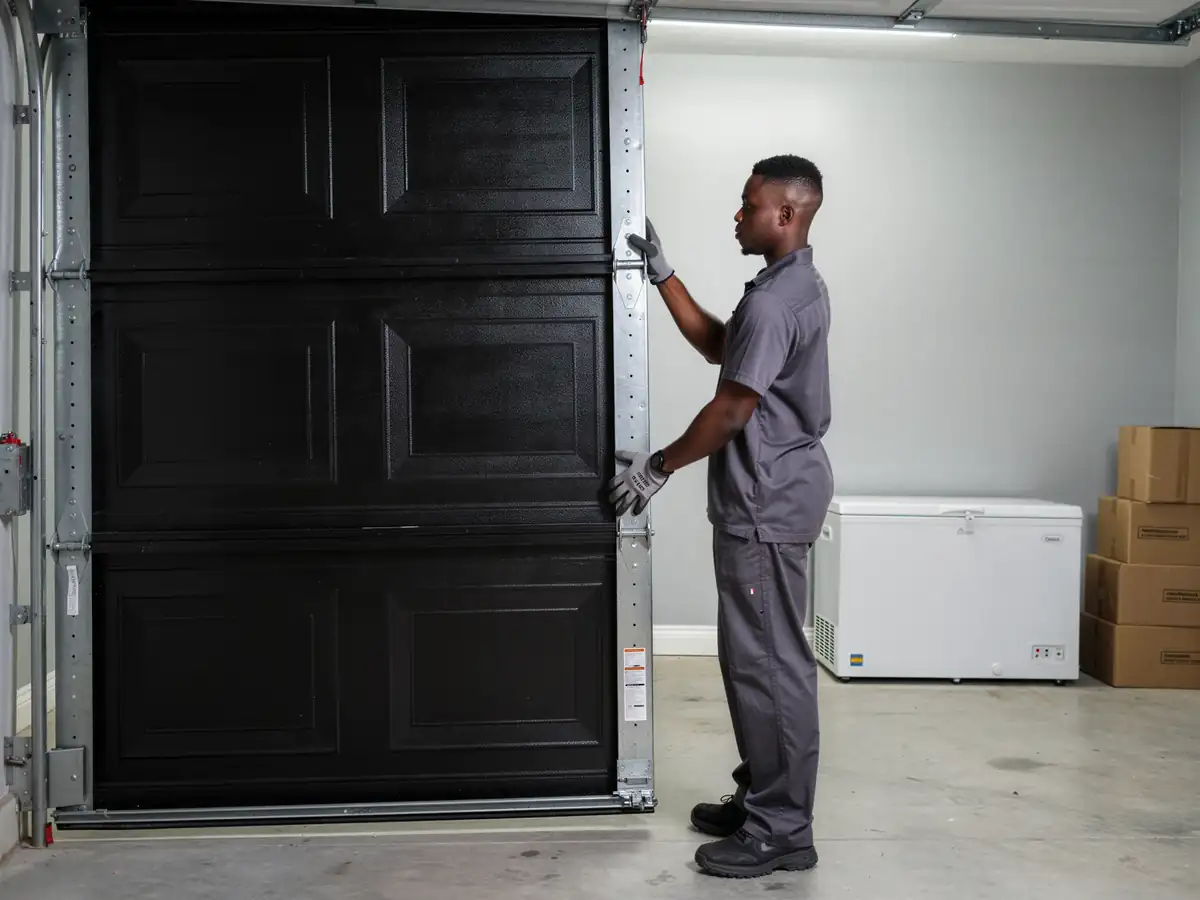
A technician in a gray uniform is inspecting a white garage door.

Repaired & tested

The repair is done, the door is set true and tested, and the work area left clean.

Not sure which repair your door needs in Suffolk, VA? Describe what it’s doing - every job starts with a diagnosis.

How we work

What to expect

Diagnosis firstEvery visit starts by finding what actually failed - not a pre-written parts list.
The right part for the doorSprings and openers matched to the door’s weight and age, so the fix holds up.
Straight answersWhen a repair makes more sense than a replacement - or the reverse - you hear it plainly.
Clean, careful workTension released safely, hardware set true, the door tested under power before we leave.
88,161Residents in Suffolk
8Garage door services
3Neighborhoods & suburbs
VAServing Suffolk, VA
Questions

Frequently asked

Straight answers about garage door repair in Suffolk. Still unsure? Ask us directly.

Why does the age of my house in Franklin matter for a spring repair?

Most houses in Franklin went up around 1966, and doors from that era typically used a single torsion spring over the header rather than the double-spring setups common on newer builds. That changes which part we bring and whether the cable drums and bearings need attention at the same time as the spring.

Do you have a crew based in Franklin?

No. We run out of Suffolk, about 17 miles away, and travel to Franklin for the call. There's no local branch here, so the appointment window accounts for drive time rather than a same-town dispatch.

Can I replace a torsion spring myself to save money?

We don't recommend it. A wound torsion spring holds enough force to cause a serious injury if it slips while you're working on it, and that risk doesn't go down because the door is older - if anything, rusted hardware on a decades-old door makes it less predictable, not more.

Will the cold weather here affect how often springs need replacing?

This area sits in a moderate cold climate band, and repeated seasonal temperature swings add fatigue to spring steel and cables over the years. On a door with original 1966-era hardware, that extra decades of cycling is often why the spring and the surrounding parts wear out closer together.

Ready to get your garage door sorted?

Tell us what it’s doing and where you are in Suffolk - we’ll take it from there.

Request a QuoteCall