Getting It Booked In
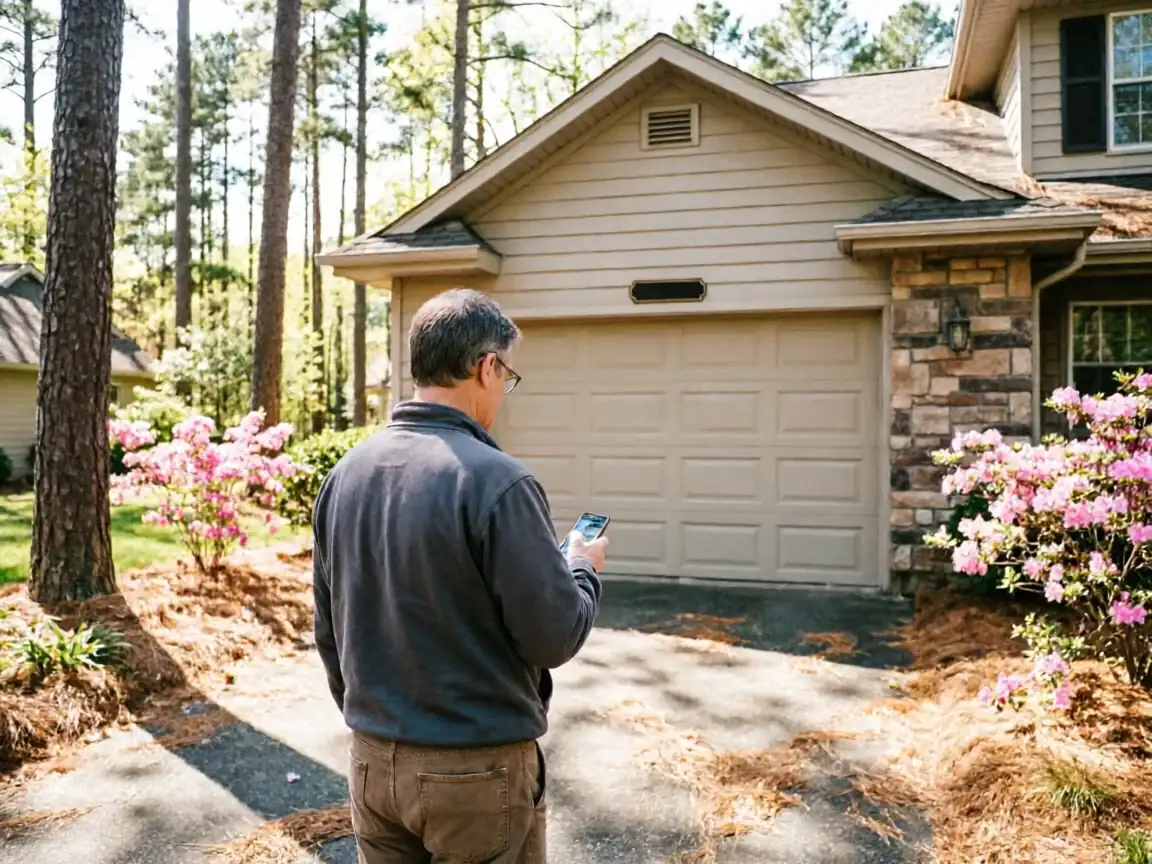
When you call about a door that's jumped the track, we ask a few things before a truck ever leaves
Which side it's hanging on, whether the door moves at all, and whether you've already tried the opener. That tells us if this is a bent track, a snapped cable, or rollers that finally gave out after years in the same housing stock most of this service area was built on.
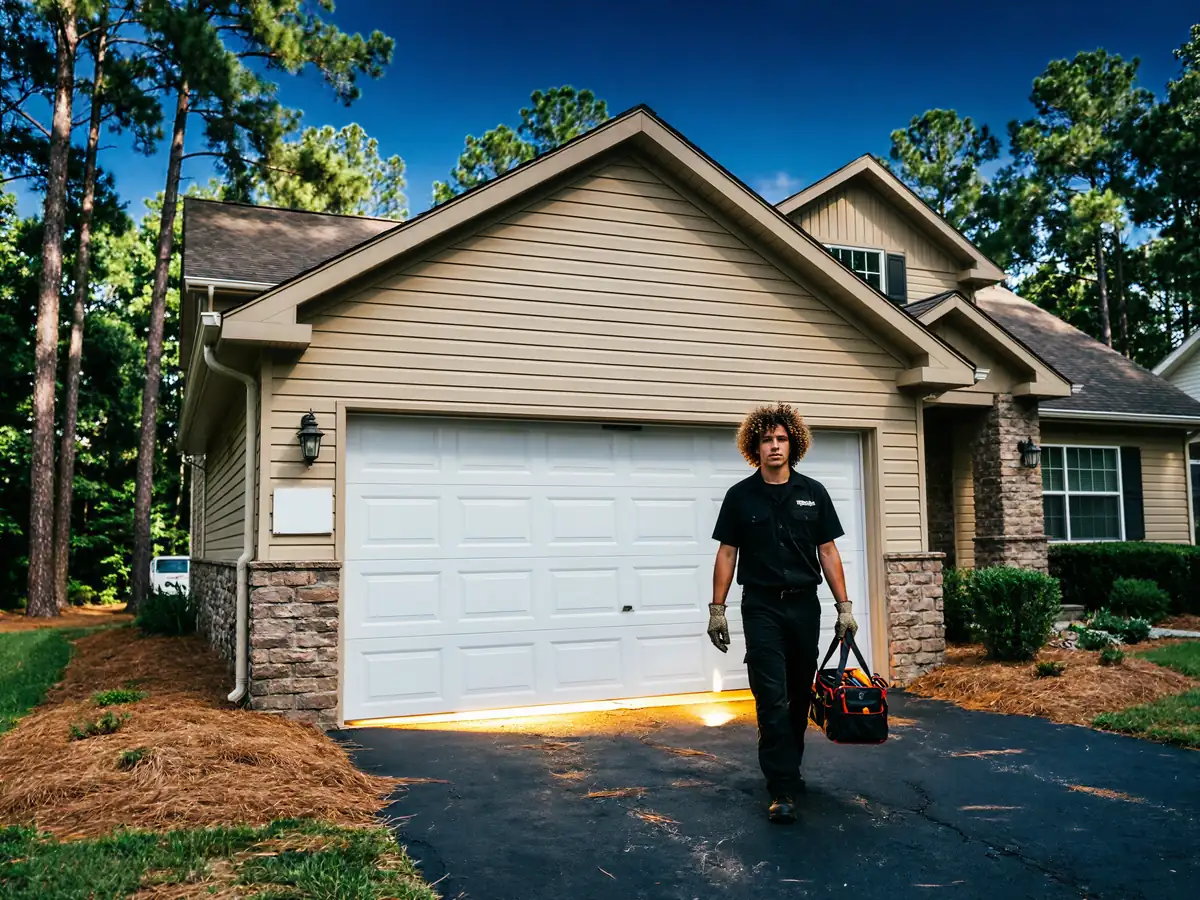
We cover the towns around Suffolk
Windsor (10 miles out), Franklin (17 miles), Smithfield (19 miles) - and scheduling runs the same way no matter which side of that range you're on. A door fully off track with the car trapped inside gets priority over one that's just rattling on one roller. If you can still close it by hand, say so - it changes what we bring on the truck and how soon we need to be there.
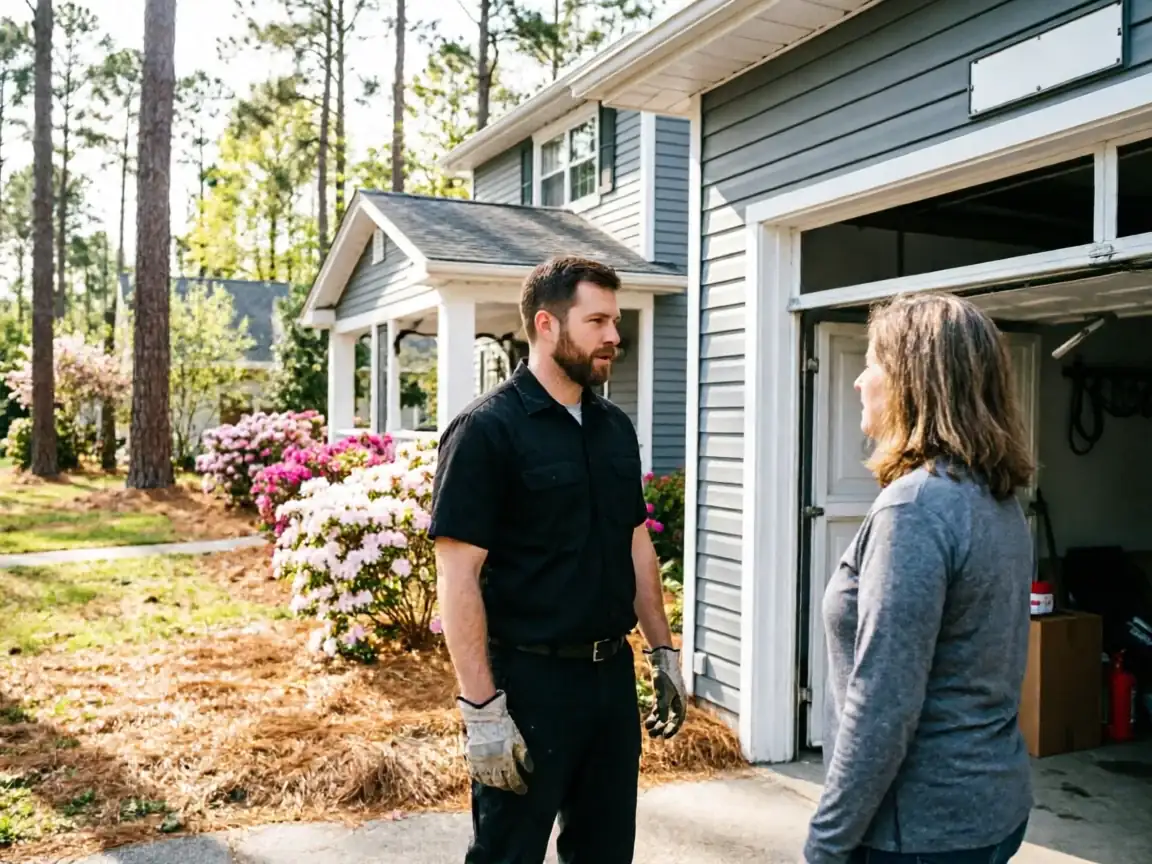
We don't quote a fix over the phone sight unseen
A bent track and a broken cable both show up as "door won't move right," but the parts and the labor aren't close to the same job.
The Symptom
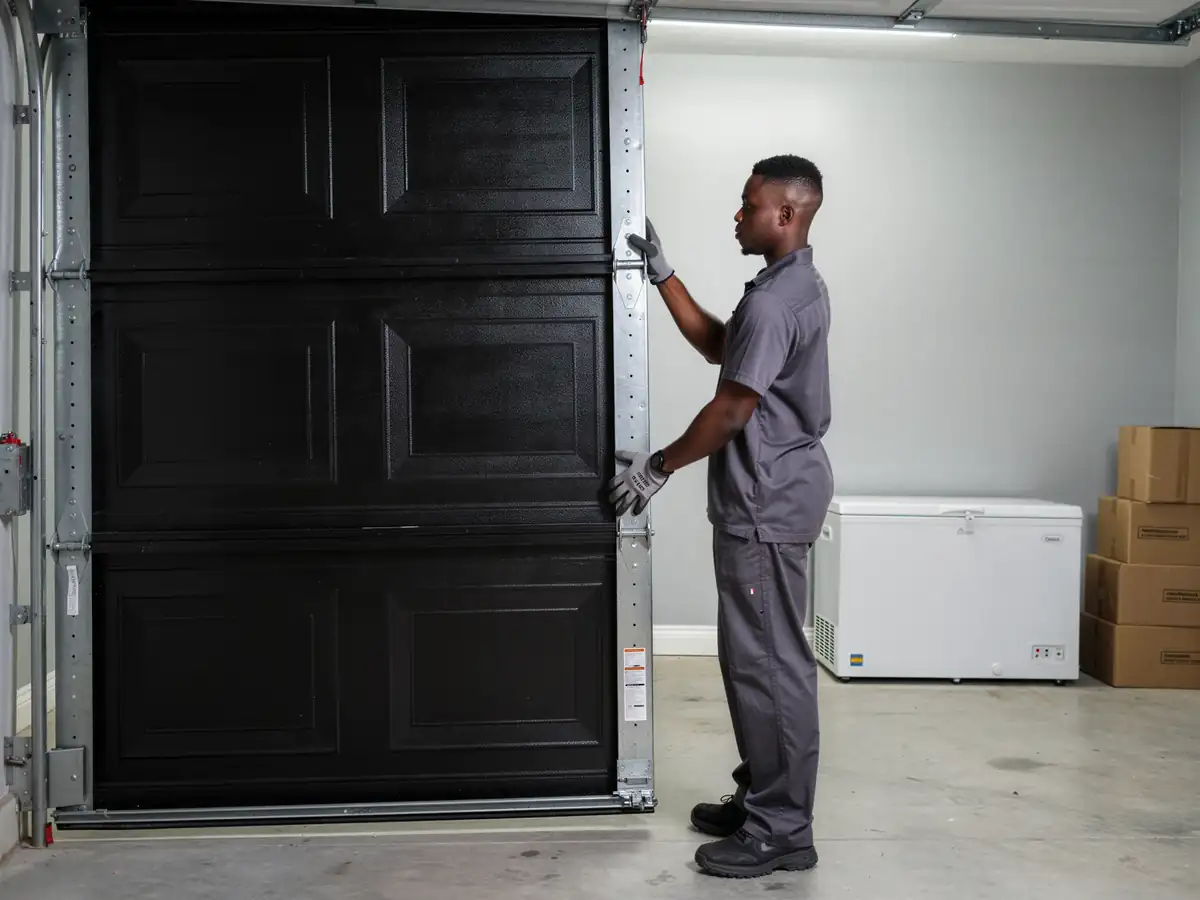
An off-track door doesn't usually happen all at once. Most of the calls we get start with a door that's been running crooked for a week or two - one corner dropping lower than the other, a roller grinding in the track, or the door catching and jerking instead of sliding smooth. By the time it's visibly off the rail, something has already failed upstream: a cable that frayed through, a bottom bracket that pulled loose, or a roller that wore down to the point the track couldn't hold it anymore.
Across the roughly 4,430 owner-occupied houses in this service area, the symptom pattern is consistent because so much of the housing went up in the same 1966-1992 window, with the median closer to 1991. That means a lot of doors and track hardware from the same manufacturing era are reaching the same failure point around the same time, not because the doors were poorly made, but because 30-plus years of daily cycling wears the same parts out on the same schedule.
If the door is making noise but still tracking straight, that's usually still fixable with rollers or cable work. Once it's visibly leaning or hanging, don't keep running the opener - you risk pulling the track off the wall entirely.
Doing It Yourself
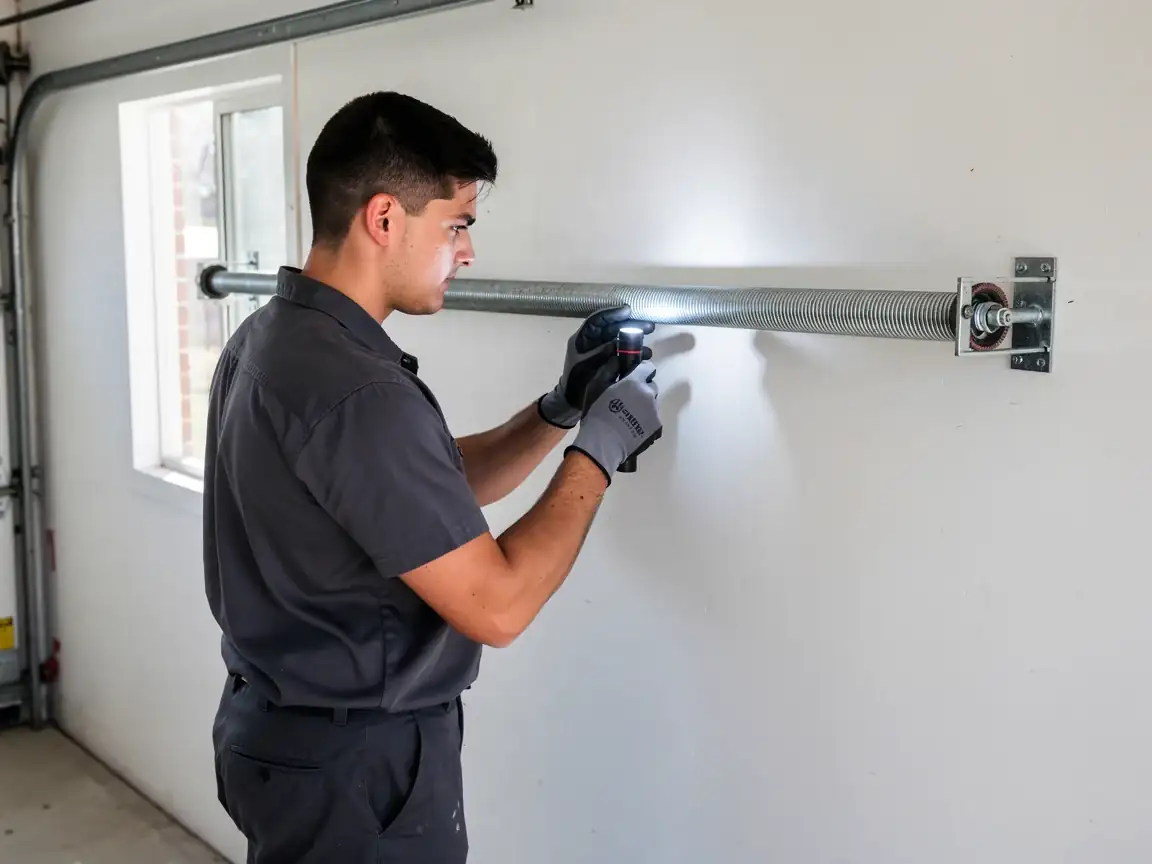
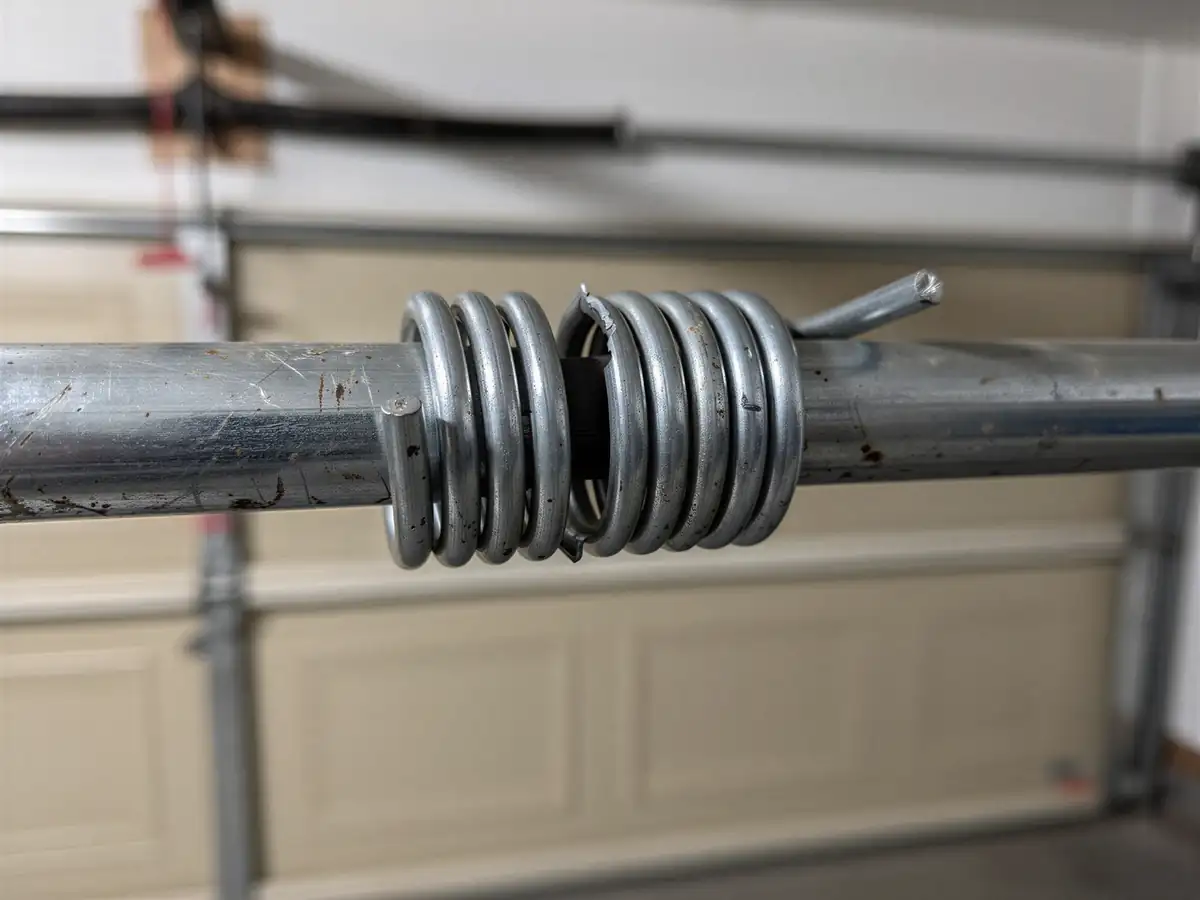
There's a real limit to what you should touch here, and we'll say it plainly: if the door is off the track because of a broken torsion spring, do not try to force it back on yourself. That spring is under enough tension to break a bone, and it's the one repair on this list we won't walk you through over the phone.
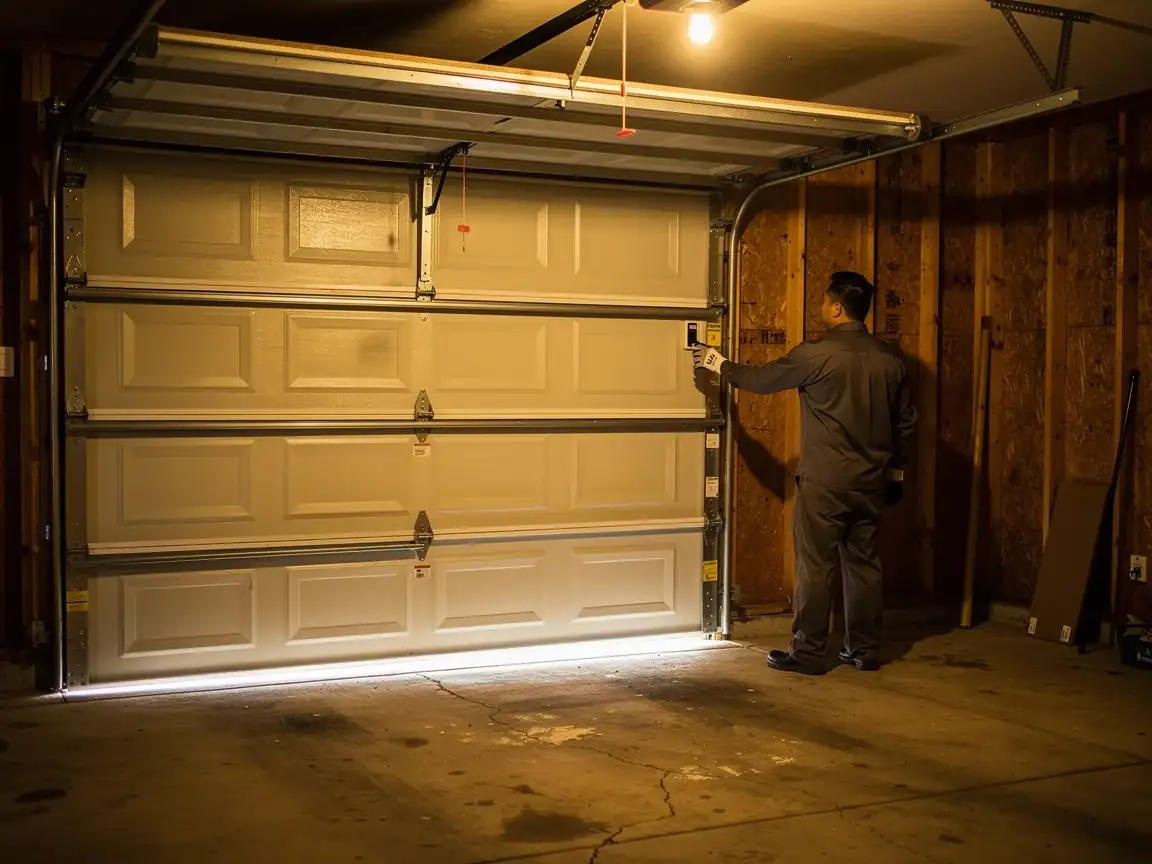
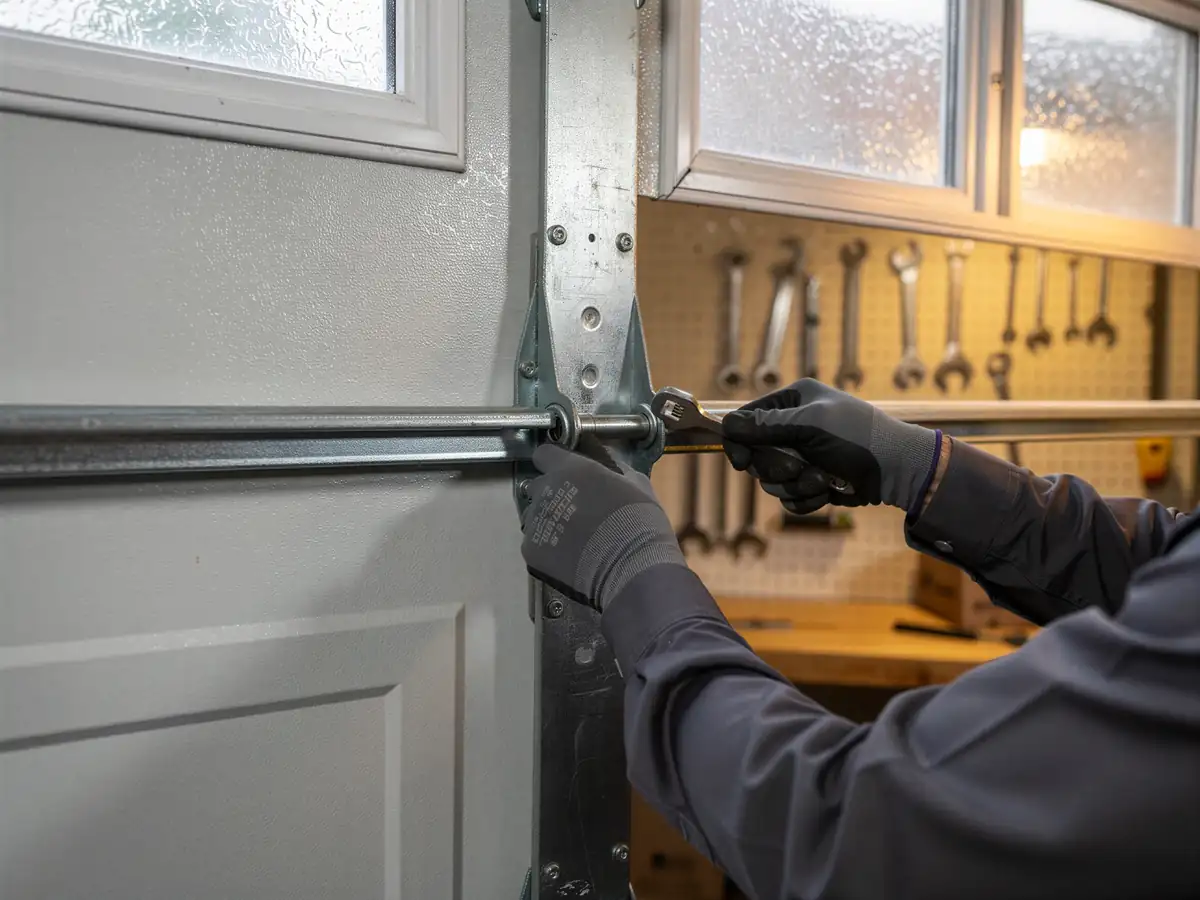
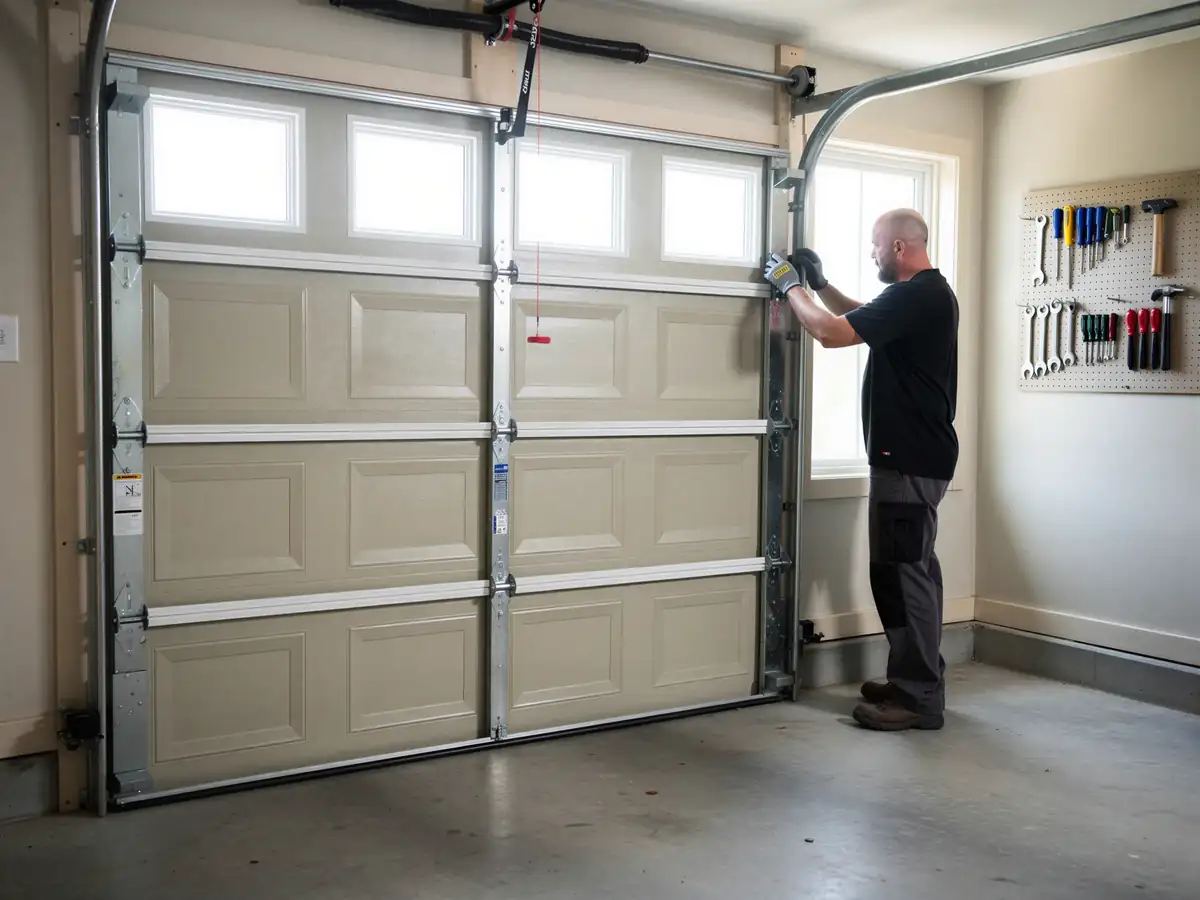
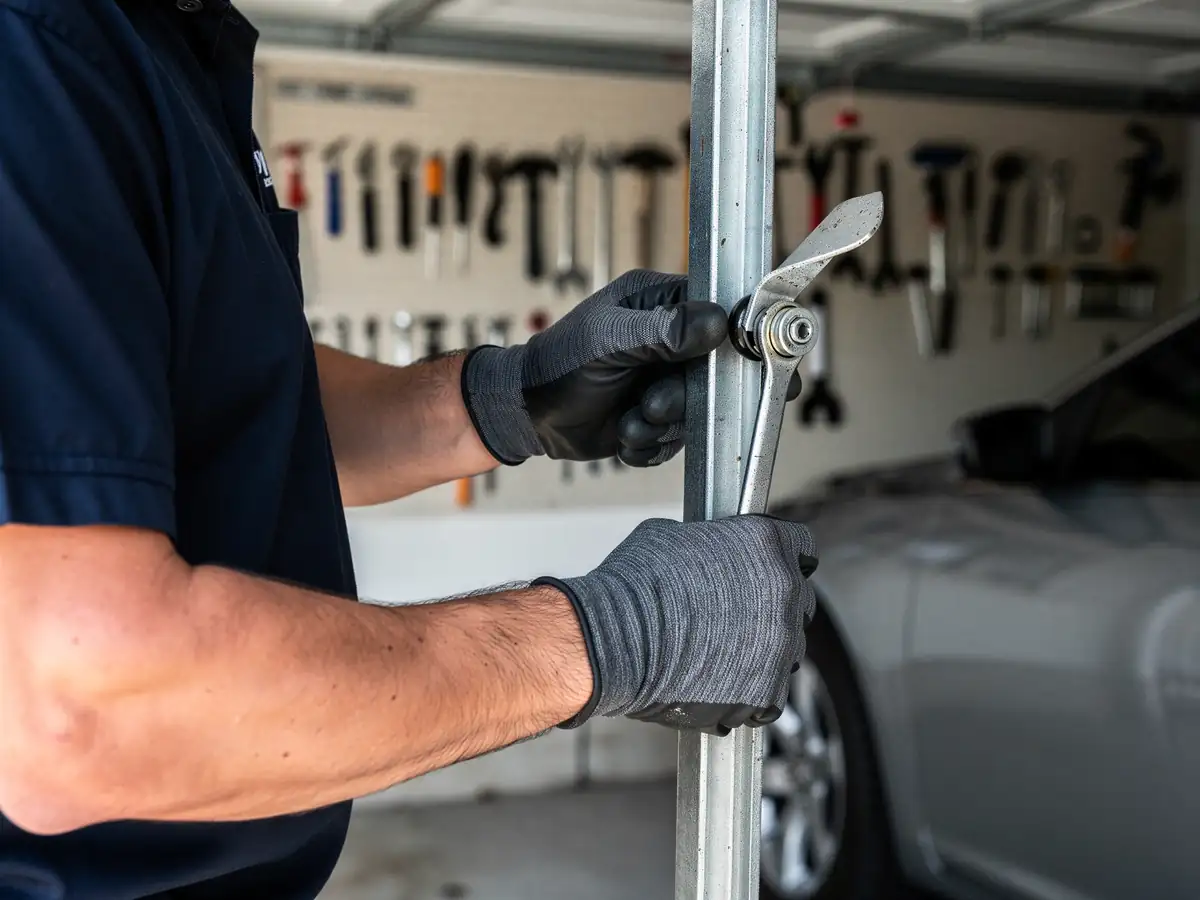
What you can safely check first: look at the bottom brackets for play, check whether the rollers are actually seated in the track or have popped out sideways, and see if the track itself is bent versus just knocked loose from a bracket. A loose bracket you can sometimes re-seat and tighten with a socket wrench if the door is still resting flat. A bent track almost always needs replacement, not bending back - bent steel fatigues and will bend again at the same spot.
Given that median household income across the service area sits around $65,321, a lot of owners want to know up front whether this is a $150 roller fix or a track-and-cable job that costs several times that. We'd rather tell you honestly on-site than guess over the phone, because guessing wrong either way wastes your time or ours.
What Causes It Around Here
The housing stock driving most of these calls
Built mostly in the 1980s and 90s across the service area's older neighborhoods - came with steel tracks and hardware that were standard for that era but weren't built for 30+ years of cycling, let alone the swings this region's cold-moderate climate puts on steel and lubricant. Track brackets loosen as framing settles over decades, and cold snaps stiffen grease in the rollers right when the door needs to move smoothest.
We see the same failure pattern on doors from that same build window regardless of which neighborhood they're in
A bracket that's slowly pulled away from the jamb, a track that's taken one too many false starts in near-freezing temperatures, or rollers original to a door built in that late-80s to early-90s run finally seizing up. None of that is damage from misuse - it's just hardware from one production era reaching the end of its service life at roughly the same time across a lot of houses built close together.
If your door is still running on its original 1990s-era rollers
Replacing them before they fail is cheaper and less disruptive than an emergency call after the door's already off the track.