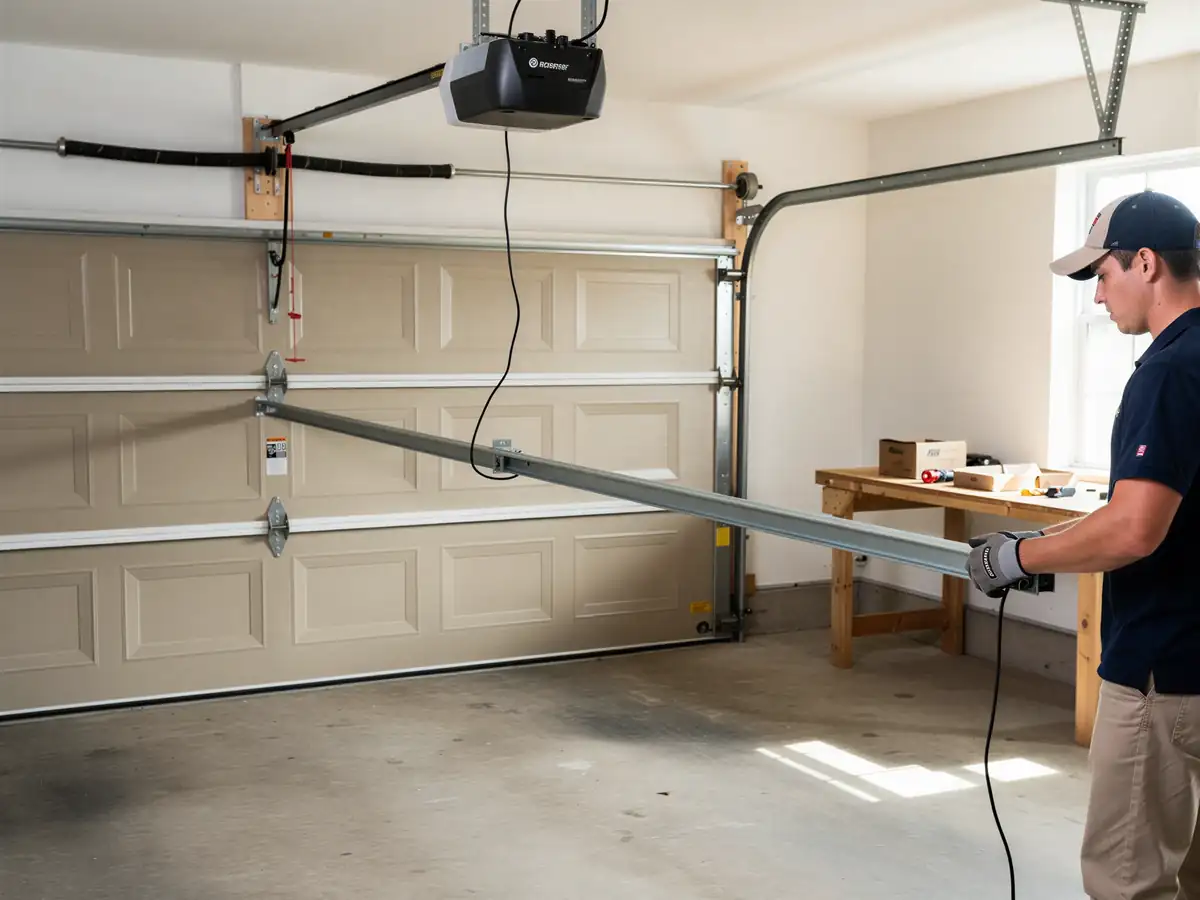
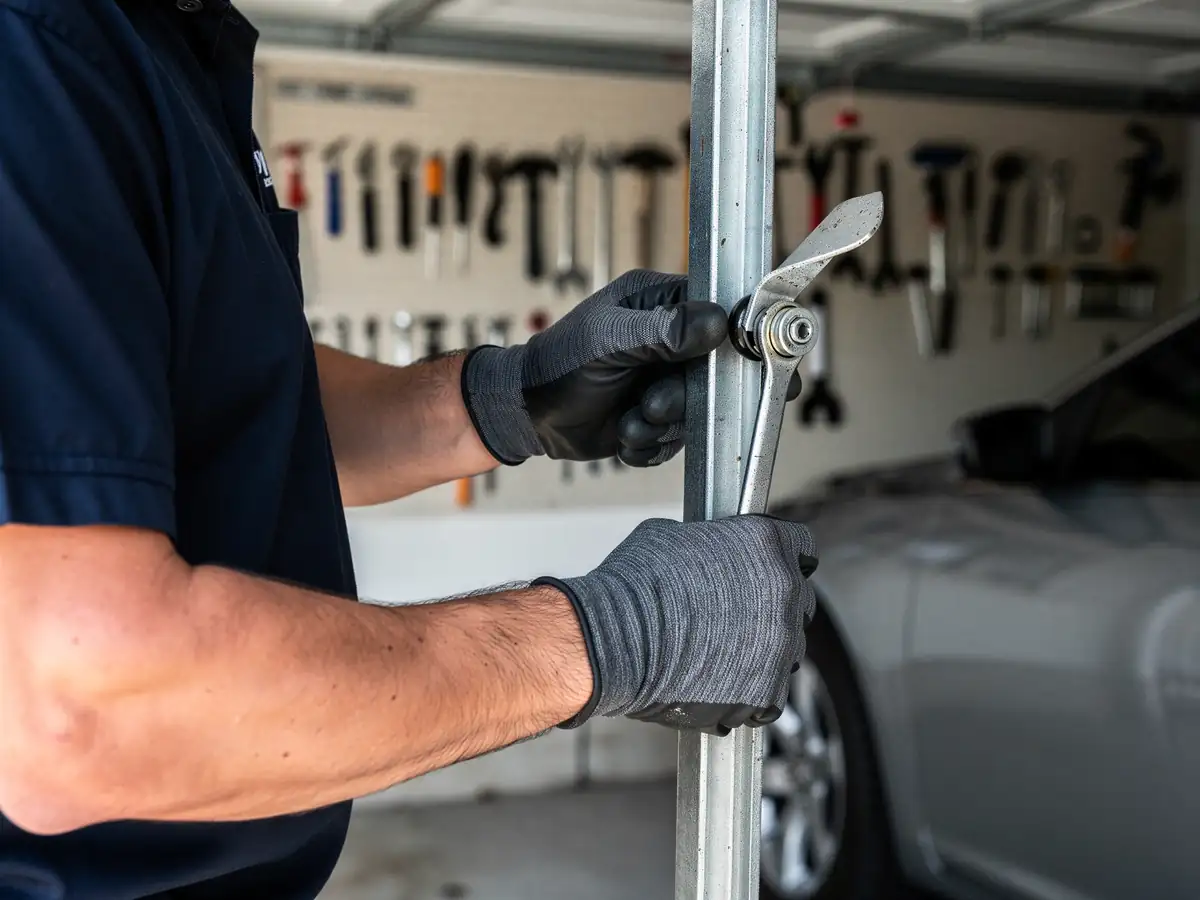
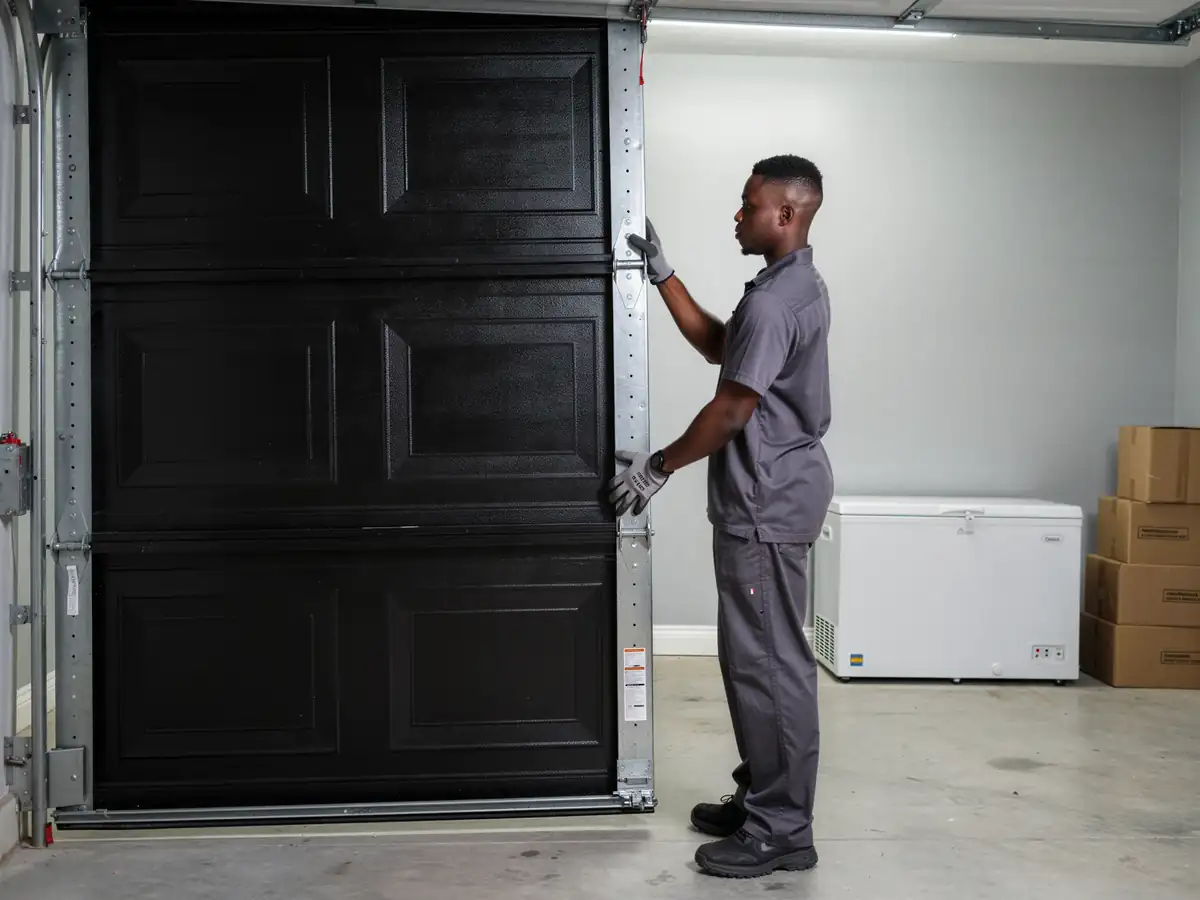
We won't quote a number here because it depends on what's behind your panel, but the biggest cost driver in this area isn't labor - it's parts matching. Most houses in the service area went up between 1966 and 1992, with a lot of that stock clustered in the 1980s and 90s across the three main pockets we work in. That means a good share of doors still run on original tracks and galvanized hardware sized to specs that newer doors don't use. If your spring or hinge is original to a house from that window, we may need to order a part rather than pull one off the truck, and that adds a day or two, not because we're slow but because that hardware isn't something every supplier stocks anymore. Median household income here runs around $65,321, and most of the repair calls we get are owners trying to fix one failed part rather than replace the whole door - which is usually the right call unless the track itself is bent or the door predates any insulation at all. We're honest when a repair isn't worth it against a full replacement; we'd rather tell you that up front than have you pay twice.
When Waiting Is Fine
Not every noise or sag means a service call tonight. The climate here sits in a moderate cold band, not the deep-freeze swings that crack metal outright, so a door that's stiff or slow in January usually isn't about to fail catastrophically - it's just lubricant thickened up and tension sitting a little off. If one spring on a two-spring door is still holding and the door opens and closes with effort but no grinding, that can wait a few days for a scheduled visit instead of an emergency trip. What can't wait: a cable that's frayed or off the drum, a door that's dropped and won't hold itself up, or a track that's visibly bent - those get worse fast and can hurt someone. With 4,430 owner-occupied houses across roughly 7,893 households in this service area, we see a steady split between can-wait maintenance calls and same-day failures, and most of that split tracks directly to how old the hardware on the door actually is.
What Is Going On
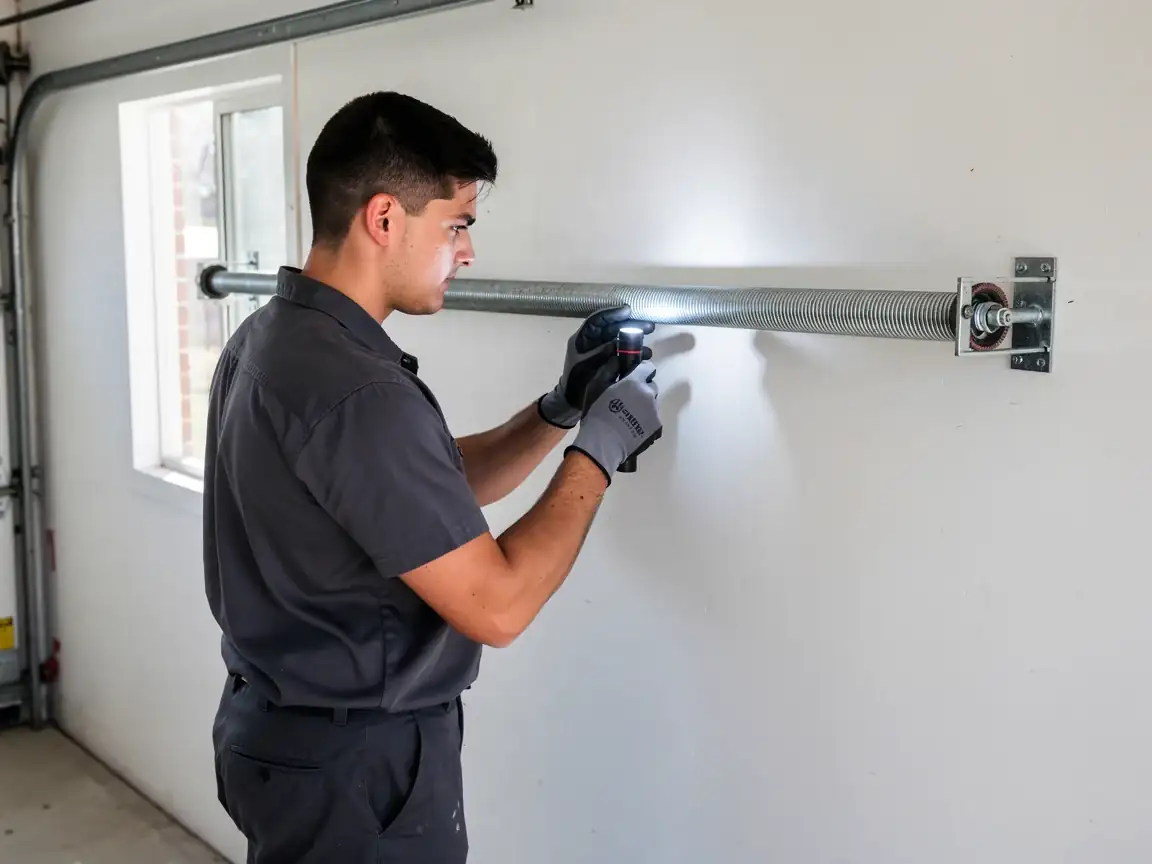
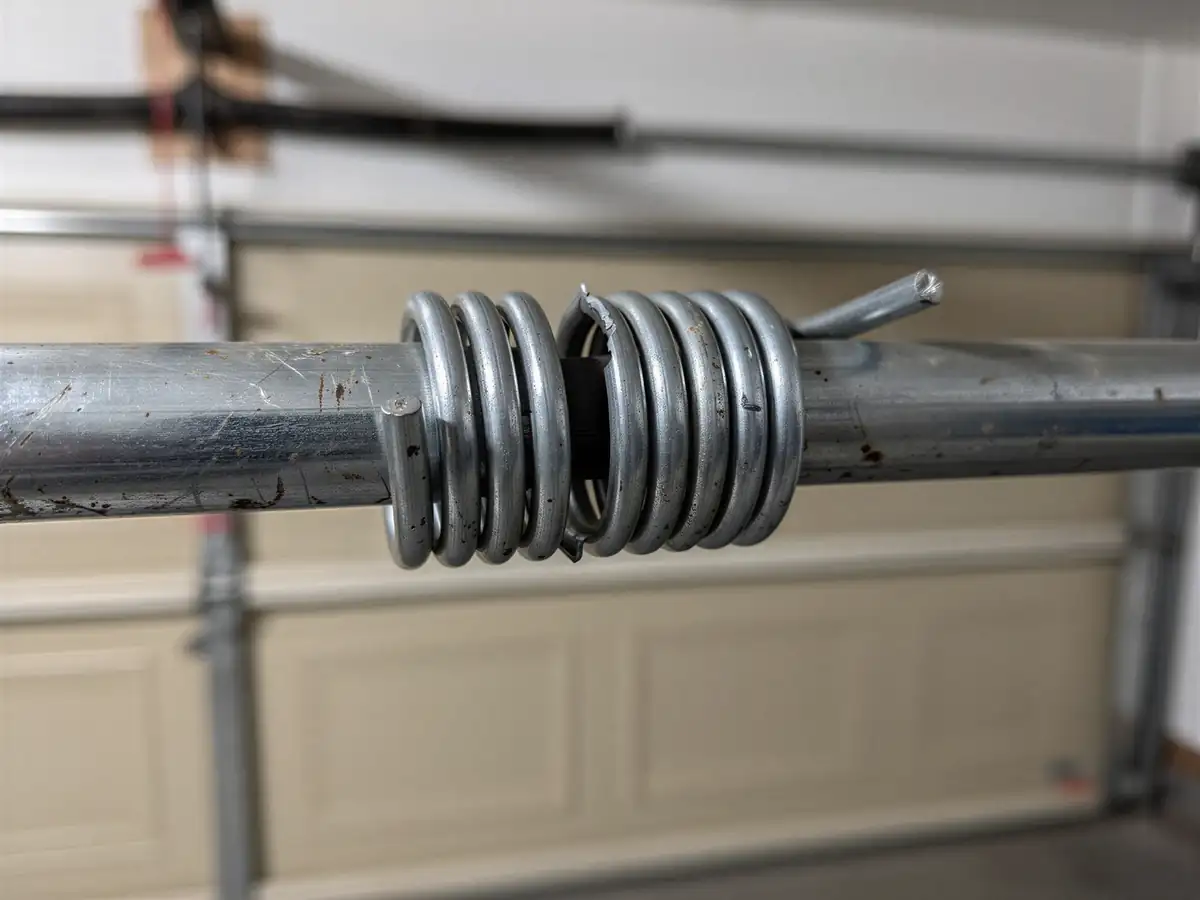
A lot of what we find on service calls traces straight back to the housing stock. Doors on homes built in the 1966-1992 window, with the bulk of that landing in the 1980s and 90s, were installed with steel torsion or extension springs rated for a lifespan that's long since passed on most of them. Galvanized track from that era has usually held up fine structurally, but the rollers and end bearings that ride in it are original more often than owners expect, and they wear down to a rough, uneven roll long before anyone notices a problem. We also see a fair number of openers from the same build era still in service - mechanically fine, but without the safety reversal sensors that became standard later, which is worth knowing if you've got kids or pets near the door. None of this is dramatic. It's just a house doing what a 30-to-50-year-old house does, one part failing roughly in the order you'd expect.
What the Weather Here Does to It
Moderate cold doesn't crack a spring the way a hard freeze can, but it does stiffen the lubricant on track and rollers enough that the opener has to work harder every cycle, and over a winter or two that extra strain shortens the life of a spring that was already near the end of its coil count. Steel contracts slightly in cold weather too, which is why a door that ran quiet in summer can start catching or binding on the track once temperatures drop - the tolerances tighten just enough to matter on older hardware. This is less about any one cold snap and more about repeated swings through the season, which is exactly the pattern this area gets rather than sustained deep freezes. If your door's acting up more in winter than summer, that's usually the tension and the lubricant, not a sign the whole unit is failing.
How it works
From “it’s stuck” to “it’s fixed”
01
Tell us what’s wrong
Describe the symptom - won’t open, loud bang, opener runs but the door won’t move.
02
On-site diagnosis
A technician tests the door under power and by hand and finds what actually failed.
03
Clear, up-front plan
You get the fix that’s needed and what drives the cost - before any work starts.
04
Repaired & tested
The repair is done, the door is set true and tested, and the work area left clean.
Not sure which repair your door needs in Suffolk, VA? Describe what it’s doing - every job starts with a diagnosis.
Why does my garage door get stiff every winter but fine in summer?
It's almost always lubricant thickening on the track and rollers combined with steel contracting slightly in moderate cold. The opener has to work harder, and over a few winters that extra load shortens the life of a spring that's already aging. It's rarely a sign the door itself is failing.
My house was built in the 1980s - should I expect an original door?
Possibly. A lot of houses in this service area date from that era, and original torsion springs and rollers are common finds on service calls. If yours hasn't been replaced, the hardware is likely well past its rated cycle count, which is worth checking before it fails without warning.
Can a repair wait until a scheduled appointment?
If the door still opens and closes, one spring is holding, and there's no grinding or visible bend in the track, yes - that can usually wait a few days. A frayed cable, a dropped door, or a bent track should not wait; those get worse quickly and can be dangerous.
Ready to get your garage door sorted?
Tell us what it’s doing and where you are in Suffolk - we’ll take it from there.