Getting It Booked In
Most calls we get start the same way
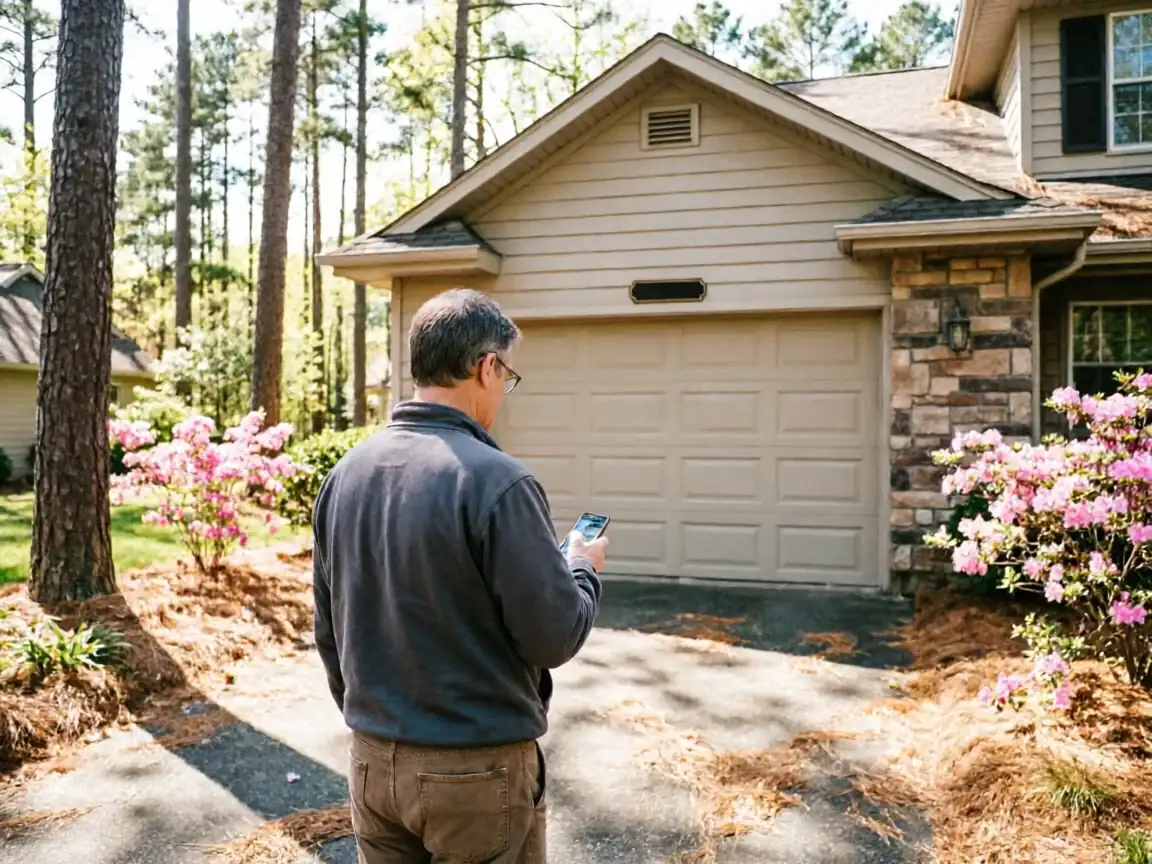
The door hesitates, groans, or stops halfway and won't go up or down right. Tell us the age of the house if you know it - a lot of Suffolk's stock went up between 1966 and 1992, with a good chunk of it clustered in the 1980s and 90s, and that tells us a lot before we even open the truck. If your opener is original to a house from that era, we're not guessing about what's tired, we already expect it.
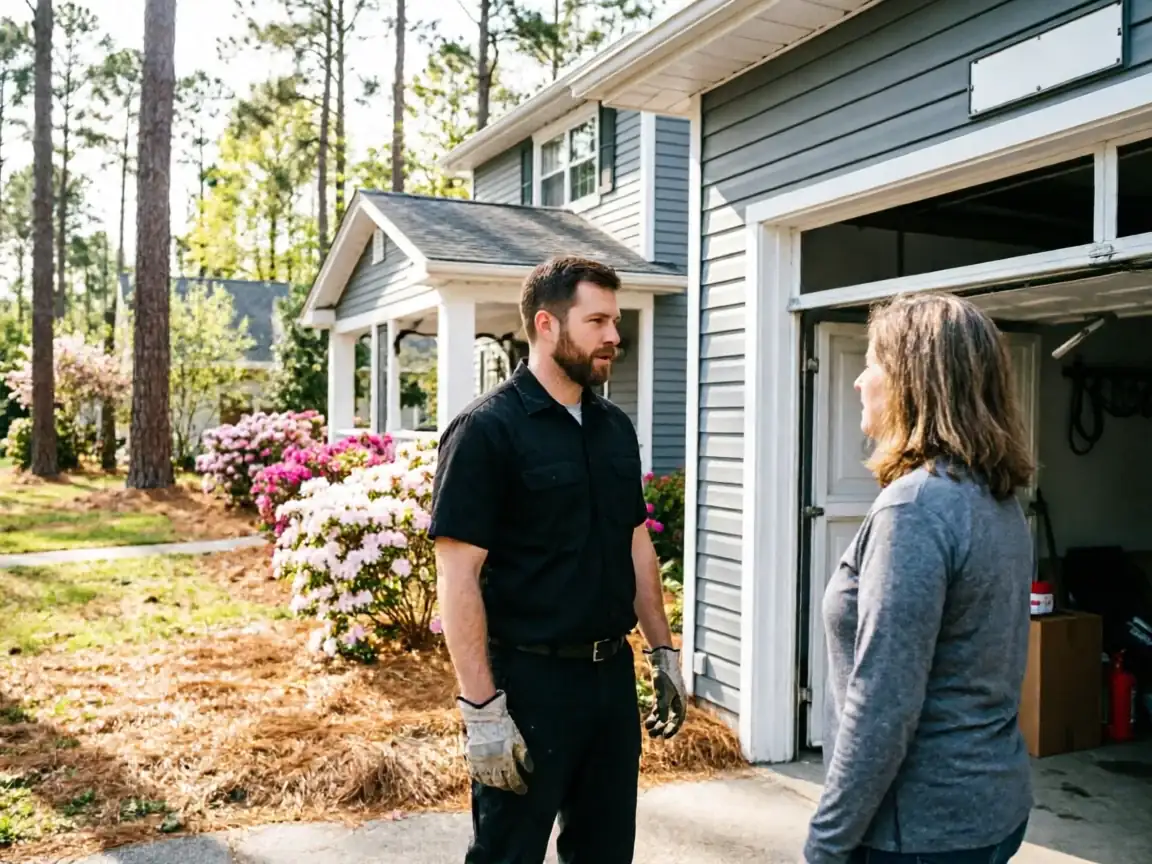
We ask a few quick questions on the phone
Does the door bind at a certain spot, does it reverse on its own, is there a loud bang you heard once and then quiet. That narrows the job before we arrive so we bring the right spring size and the right hardware instead of showing up and ordering a part.
One honest limit here
If a part is obsolete or specific to an opener brand that stopped making replacements years ago, we may need a day or two to source it rather than fix it same visit. We'll tell you that up front instead of promising a quick turn we can't back.
The Symptom
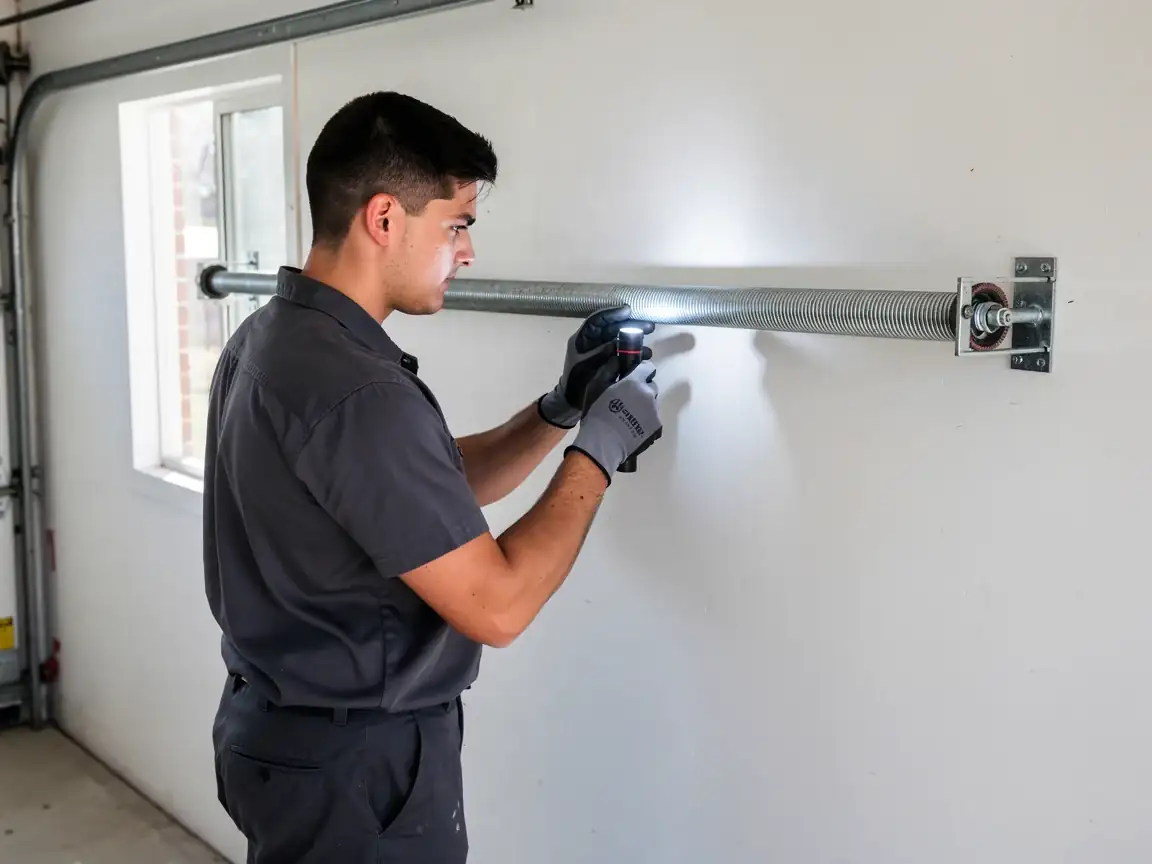
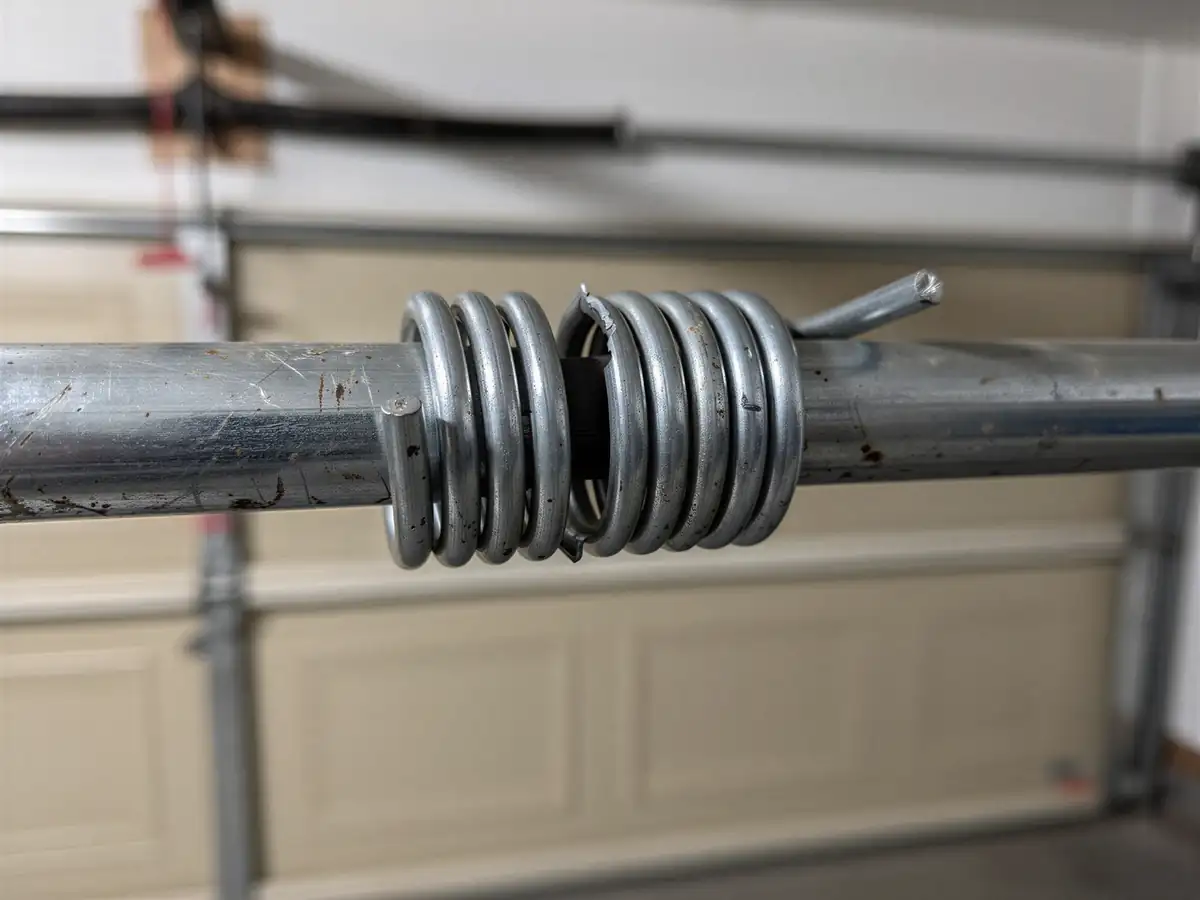
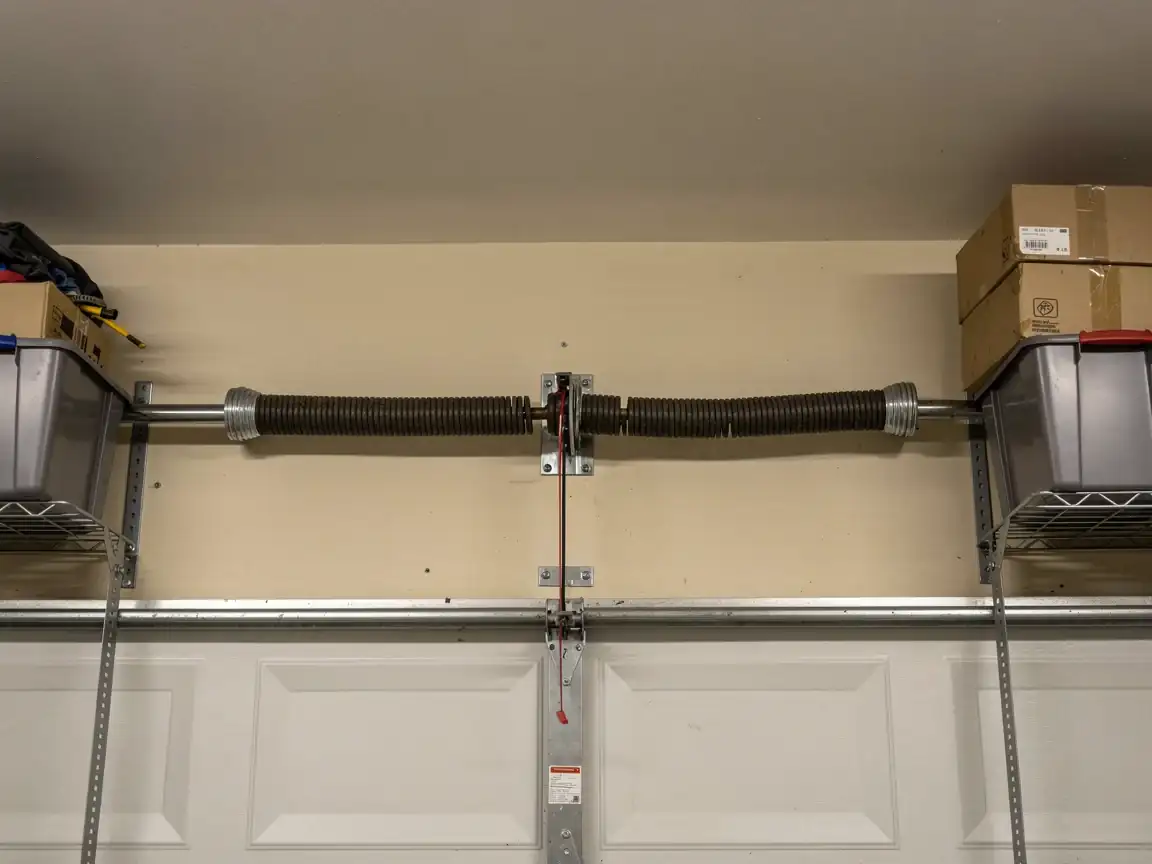
The door that's heavy to lift by hand, or an opener that strains and clicks without moving the door, almost always points to a torsion spring near the end of its cycle life. Springs are rated for a number of open-close cycles, not years, but houses built in the 1991 median range for this area are now old enough that even a spring installed decades ago on original hardware has likely used up most of what it had.
A second common version: the door opens fine on a warm afternoon but sticks or groans on a cold morning. In our climate band - cold enough in winter to stiffen steel and tighten tolerances on older track and hinges - a spring that's already worn will show it first in the cold, not the heat. That's not a coincidence tied to any one house; it's physics acting on metal that's had 30-plus years to fatigue.
If the door drops suddenly instead of lowering smoothly, stop using it. That's a spring near failure, and running it further risks the cable or the opener trying to compensate.
Doing It Yourself
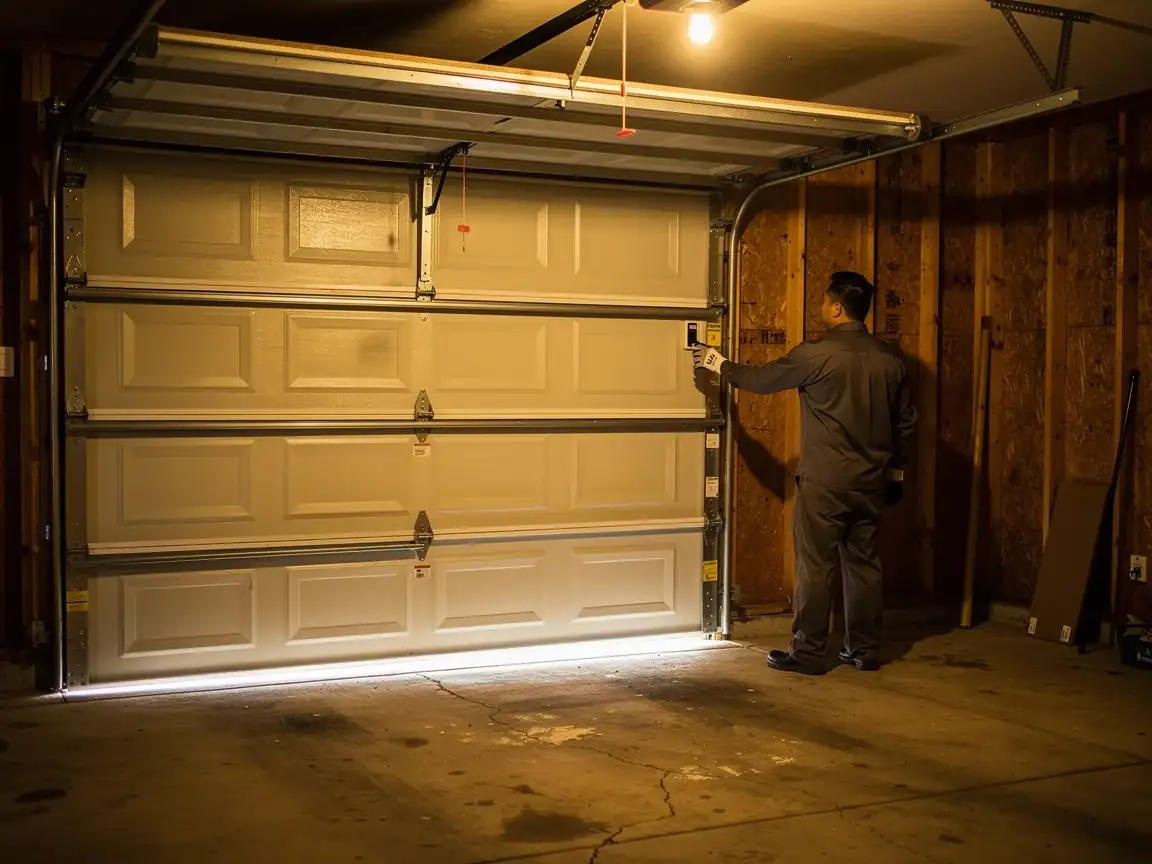
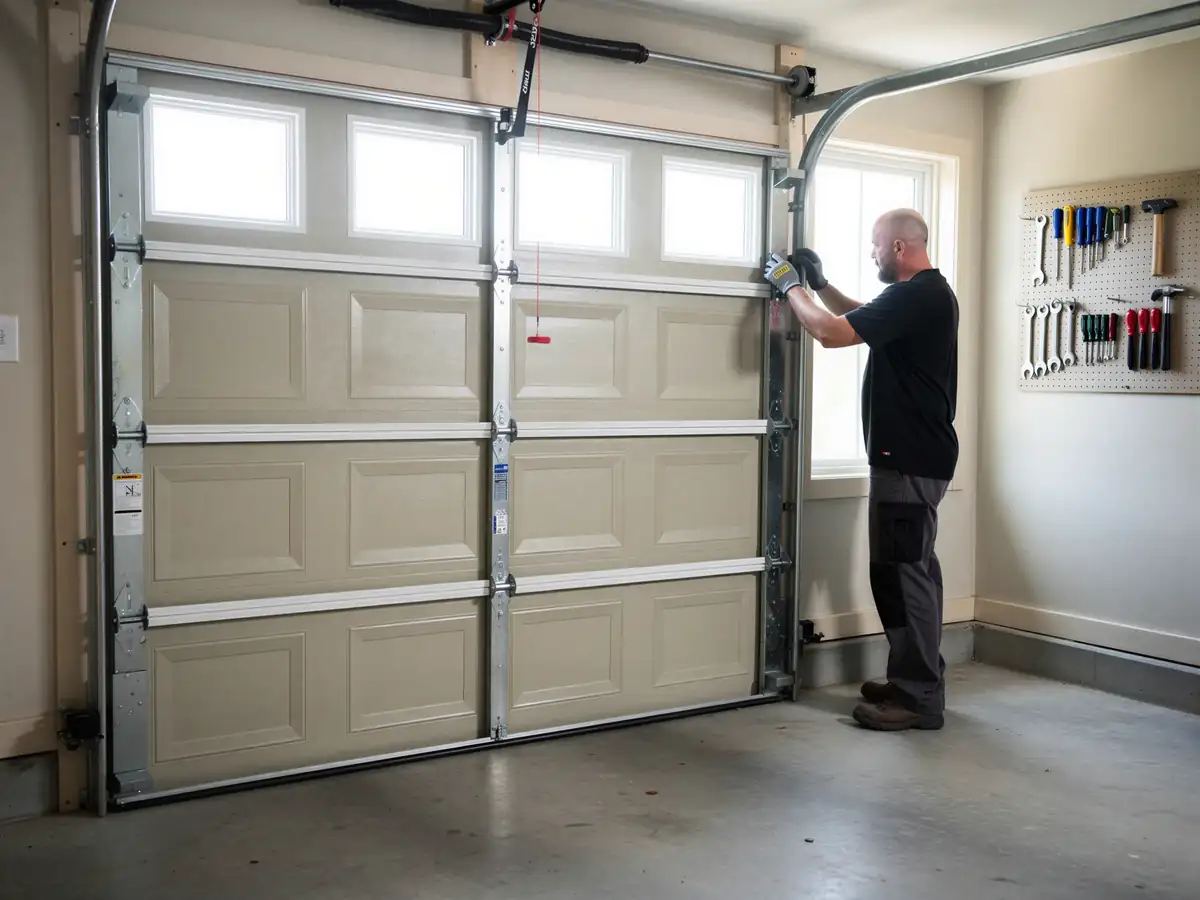
There's a short list of things worth checking yourself before you call anyone. Look at the tracks for visible gaps or bent rail - sometimes a door that 'won't close' is just off its track and nothing to do with the spring at all. Check that nothing's blocking the photo-eye sensors near the floor, since a knocked-out-of-alignment sensor will stop the door and look like a bigger fault than it is.
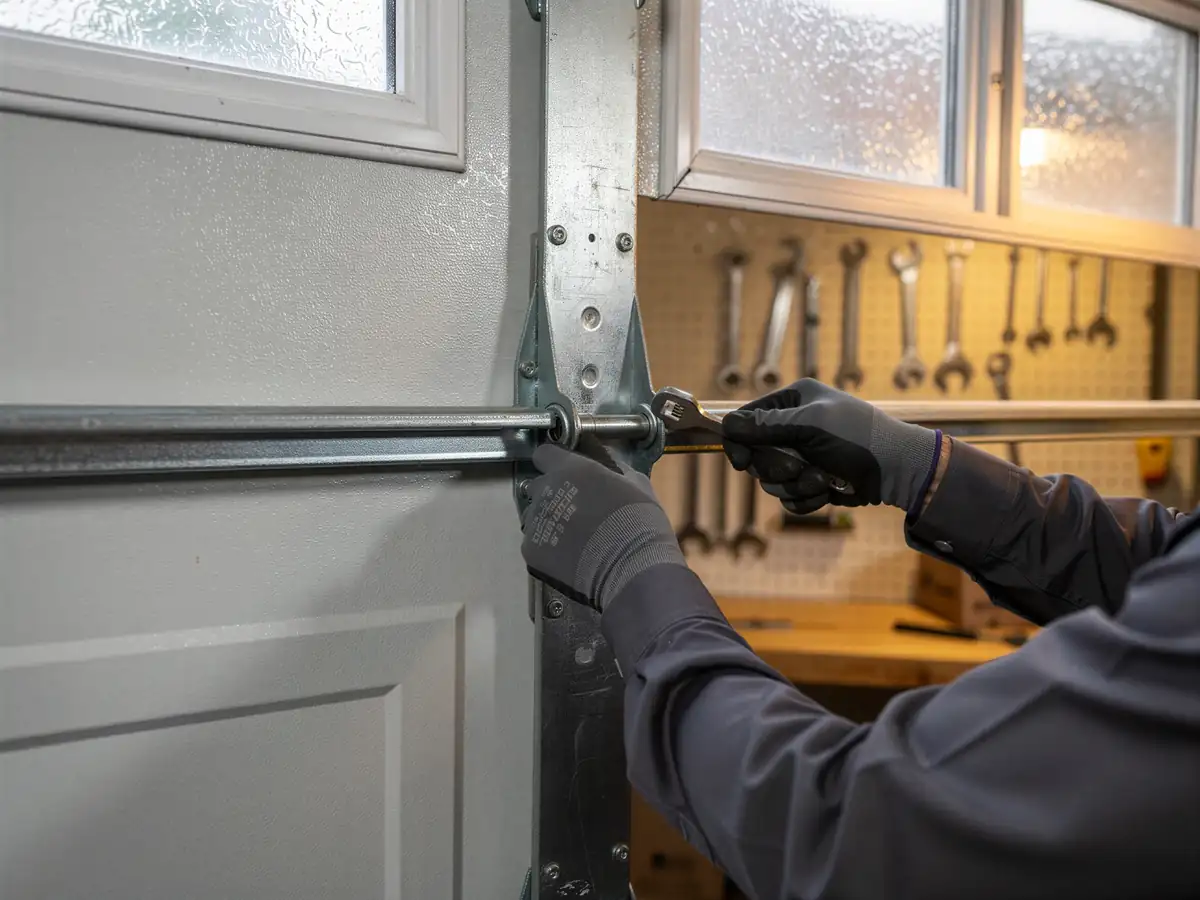
What we'd tell you not to touch: the torsion spring itself. It's under enough tension to cause a serious injury if it lets go while you're working on it, and on a door this size that's not a risk worth taking to save a service call. Lubricating hinges and rollers with a garage-door-specific lubricant is safe and worth doing twice a year, especially heading into the colder months when stiff metal needs it most.
If you've done the easy checks and the door still binds, strains, or drops unevenly, that's a spring, cable, or opener gear issue - not a DIY fix.
What Causes It Around Here
Suffolk's housing mix matters more than people think
With most of the stock in this service area built between 1966 and 1992, and a concentration in 1980s and 90s construction across the three main areas we work in, a large share of garage doors and their original hardware are now well past the point where a spring or opener motor was expected to last. These aren't new-construction complaints; they're wear-and-age complaints, and they show up in clusters because whole streets were built in the same few years.
Add the cold-moderate climate band this area sits in
And you get a second pressure on top of age: steel contracts in winter, torsion springs tighten further under tension they're already struggling with, and openers draw harder to compensate. A spring that's survived warm Augusts for years can finally let go on a cold January morning, not because anything new broke, but because the cold found the weak point first.
With roughly 4,430 owner-occupied houses in the area we cover
And a median household income of $65,321, most owners we talk to want a straight answer on repair versus replace rather than a sales pitch - and on hardware this old, repair is often the honest call only if the opener and track are still sound.
- 4,430 owner-occupied
- $65,321 median household income