Getting It Booked In
Most of the maintenance calls we take aren't emergencies yet
The door still opens, it just sounds wrong or hesitates for a second before it moves. That's the point where a tune-up is cheap and a repair later isn't. We work the area out to Windsor (10 miles), Franklin (17 miles), Smithfield (19 miles), so if you're anywhere in that stretch you're in range.
Booking is straightforward
Tell us the age of the house if you know it and what the door is doing - grinding, catching, dropping unevenly - and we'll know roughly what we're walking into before the truck leaves. With 4,430 owner-occupied houses across this service area, we see the same handful of failure patterns over and over, which is why a quick phone description usually gets us most of the way to a diagnosis.
- 4,430 owner-occupied
We don't do same-day for every call during peak season
So if your opener is already making the grinding noise that means a stripped gear, don't wait for a routine slot - say so when you call. Routine maintenance can wait a couple weeks. A door that's about to come off track can't.
The Symptom
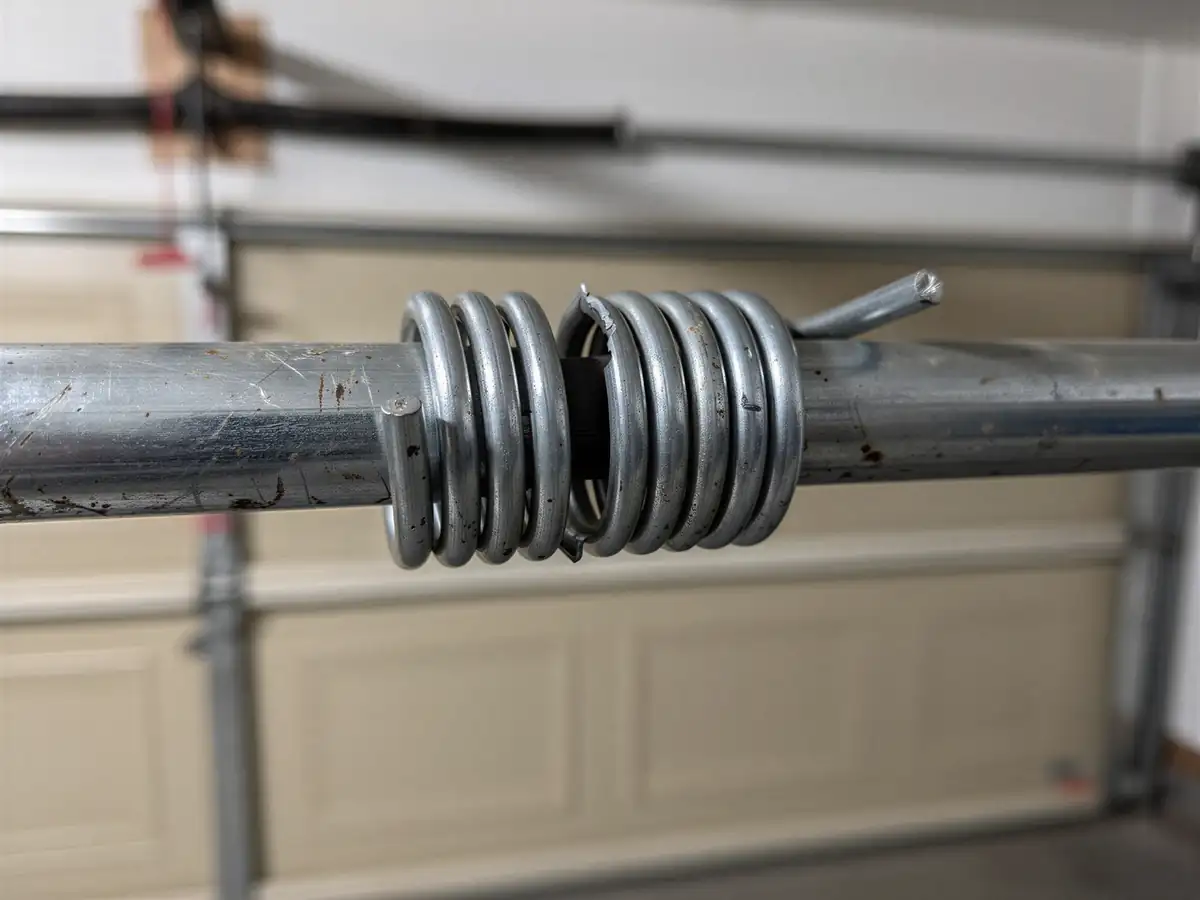
The complaint we hear most is an opener that strains - it used to lift the door in about six seconds and now it takes longer, sometimes with a pause partway up like it's thinking about it. That's a spring losing tension, and on a lot of the housing stock here, built between 1966 and 1992 with a median around 1991, that's original or first-replacement hardware finally giving out after three decades of cycles.
Second most common is noise - a rhythmic thunk or squeal that wasn't there a year ago. Usually it's a roller or hinge that's dry, sometimes it's a track that's crept out of alignment by a few millimeters, enough to matter but not enough to see without a level.
Less common but worse: a door that reverses on its own partway down, or one side that drops faster than the other. That's a cable or a spring on one side carrying more load than it should, and it won't fix itself. It gets worse with every cycle until something lets go.
Doing It Yourself
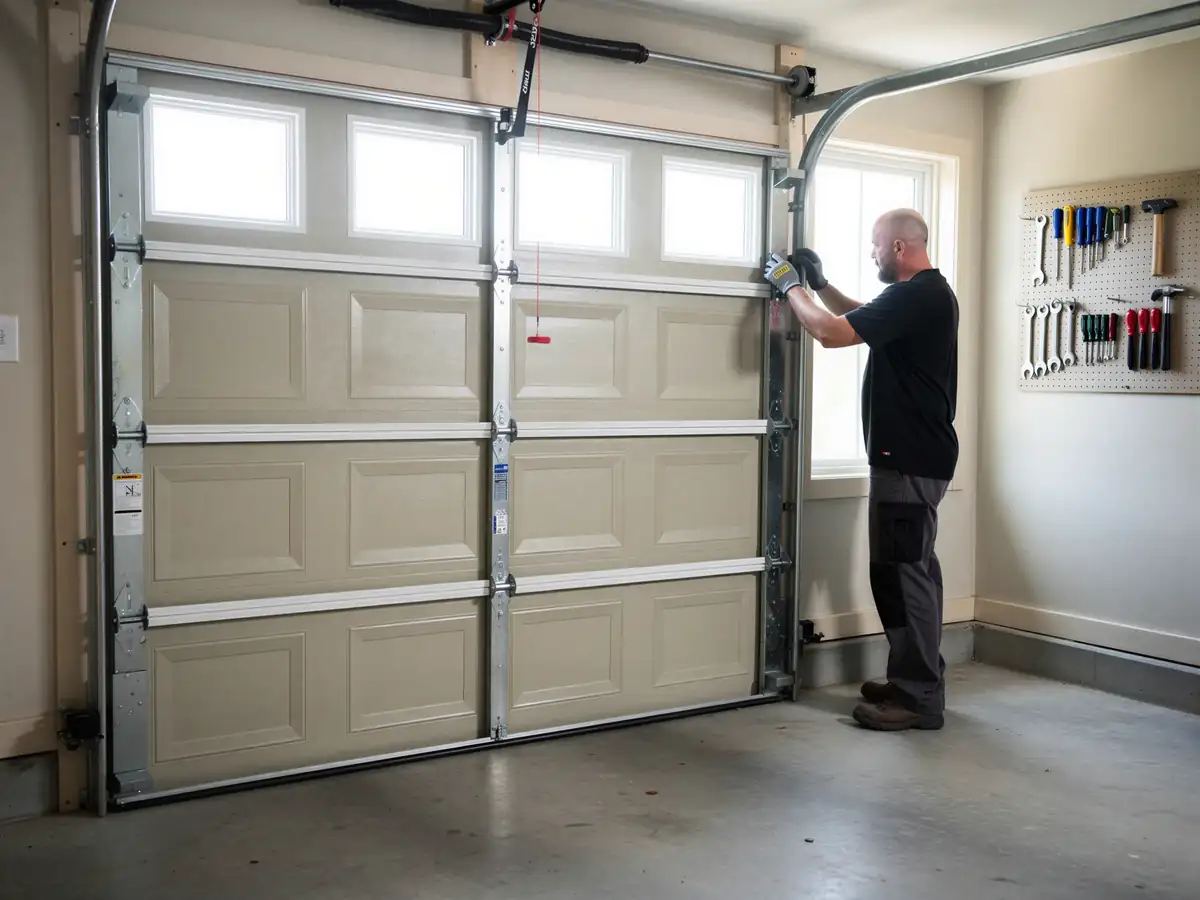
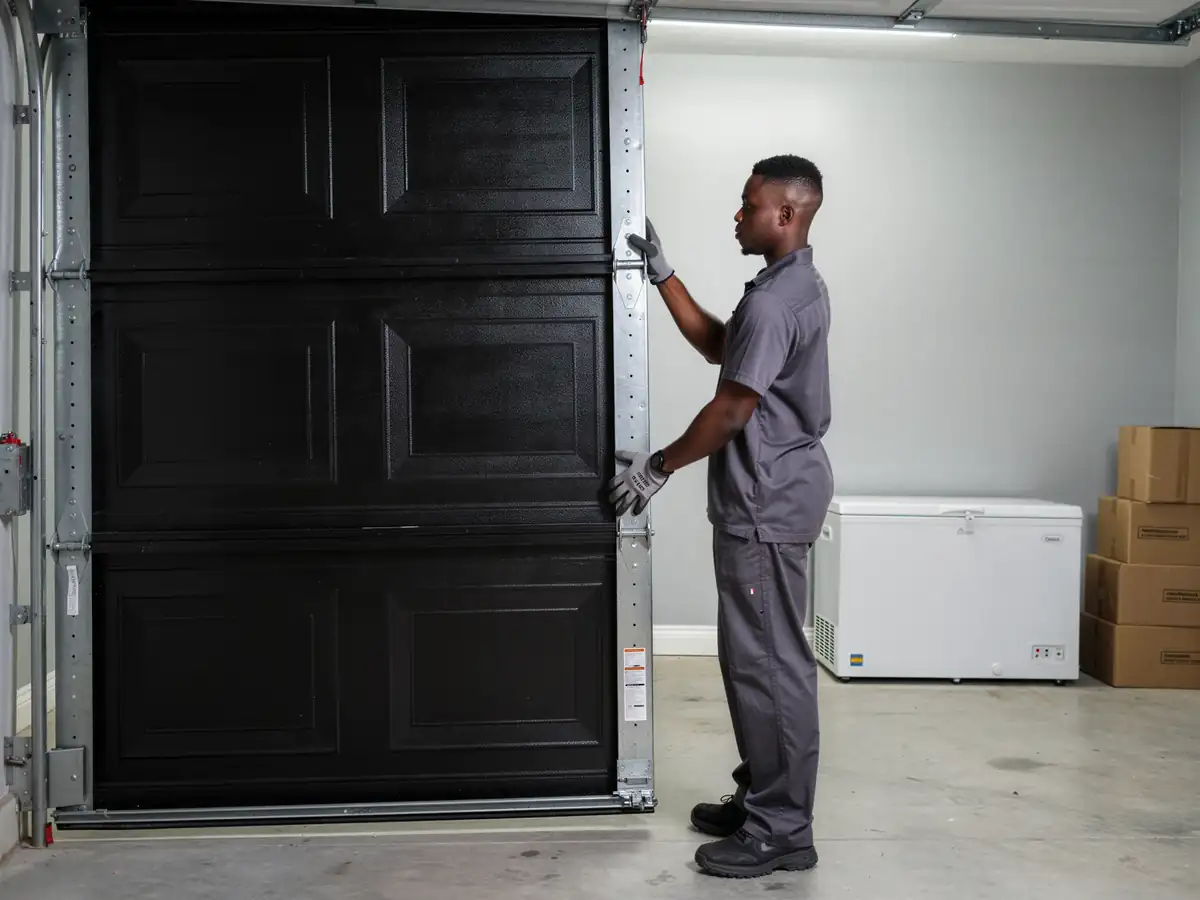
There's real maintenance you can do without a torque wrench or a ladder you don't trust. Wipe the tracks down and check for dents or gaps where the rollers ride - a bent track from a bumped car is common and easy to spot. Lubricate hinges and rollers with a garage-door-specific lubricant, not WD-40, which washes out grease rather than adding it. Check the weatherstripping along the bottom; in a cold-moderate climate like this one, it hardens and cracks faster than people expect, and a gap there is where the cold gets in.
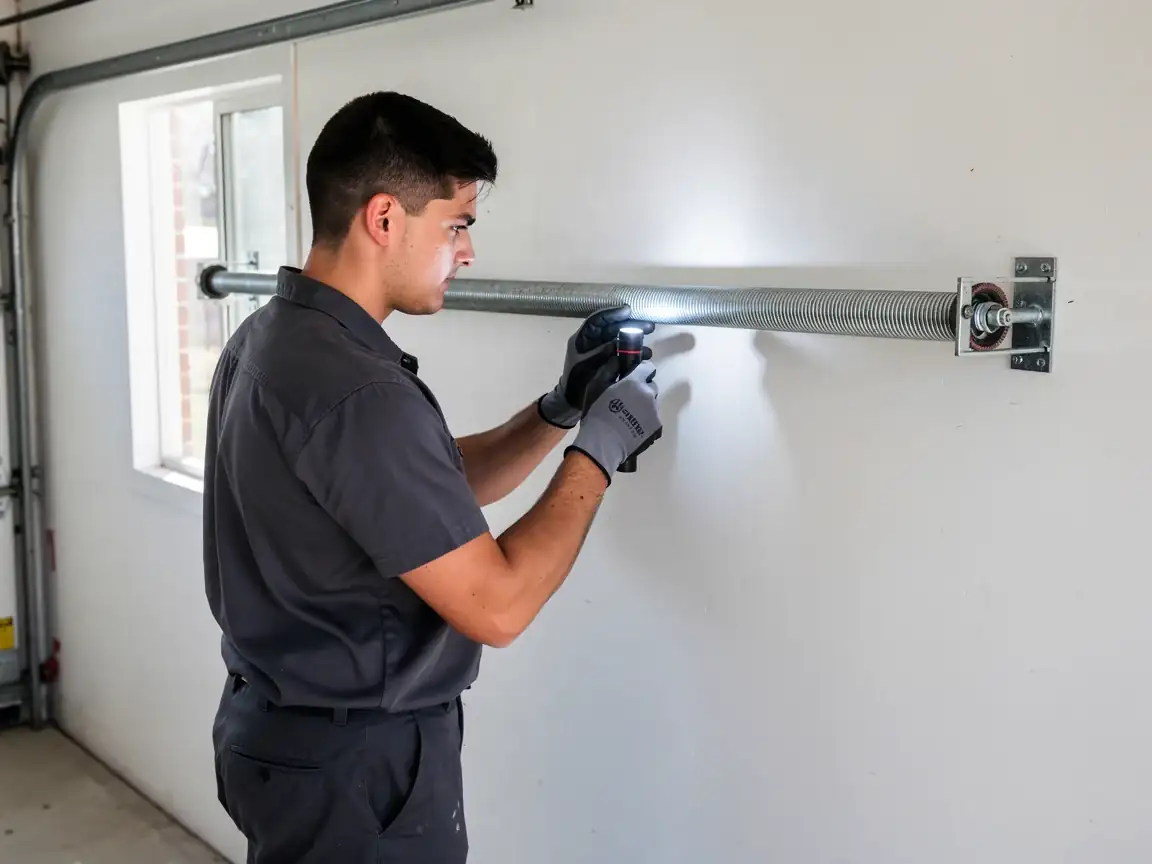
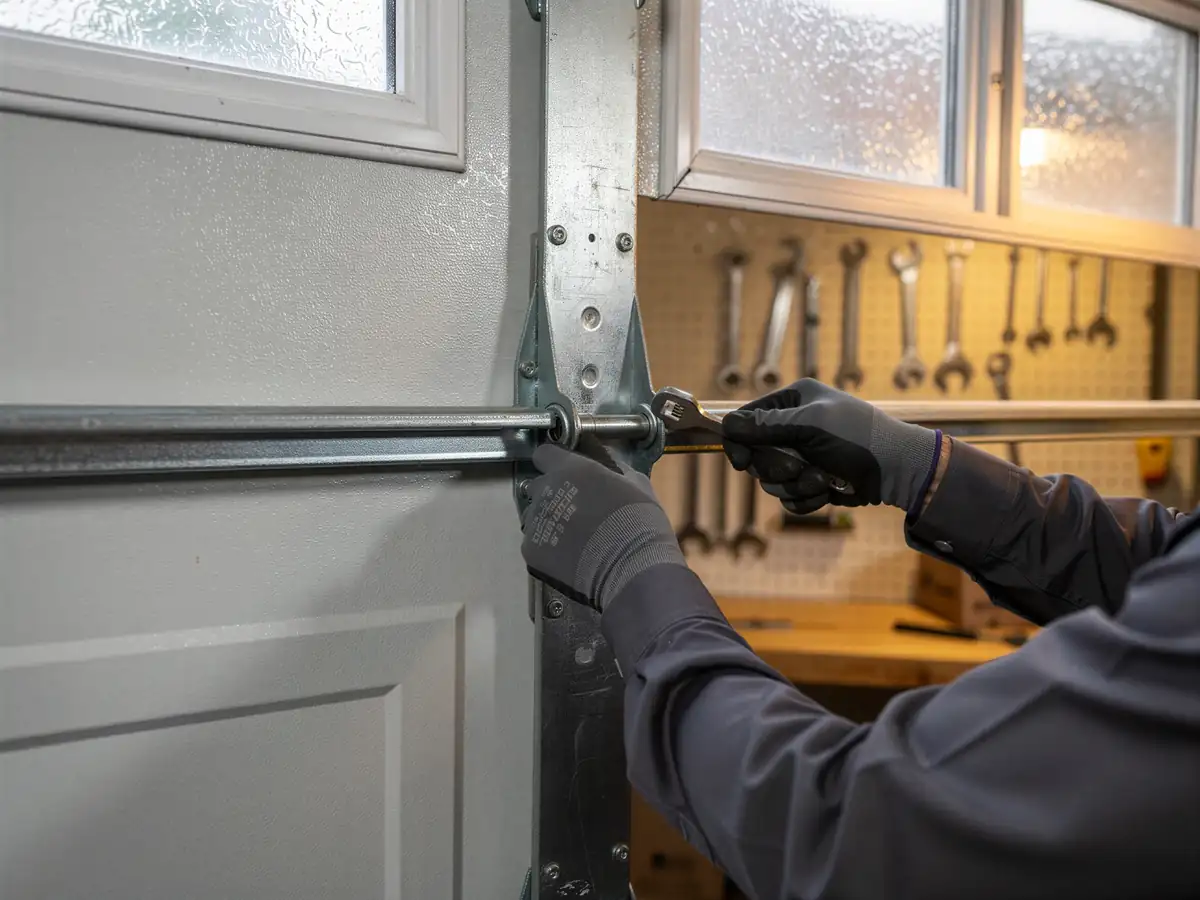
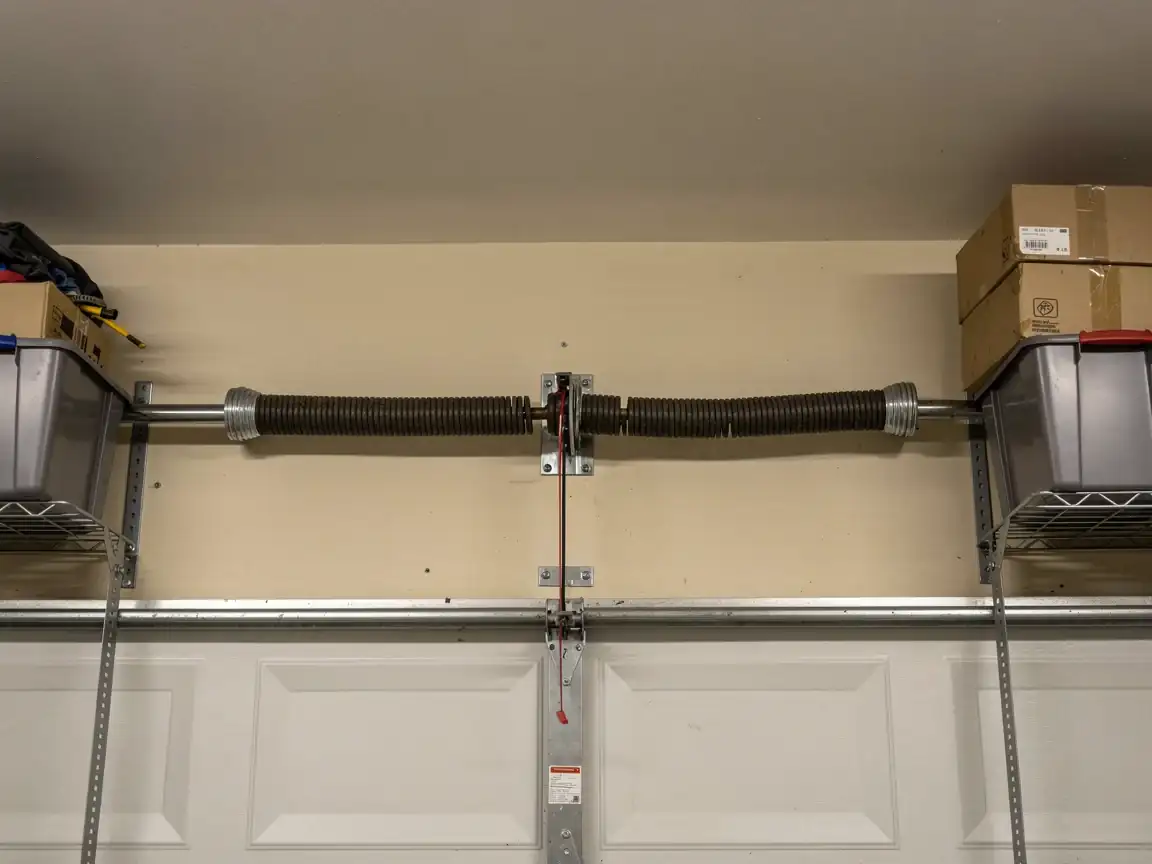
What you shouldn't touch: the torsion spring itself. It's under enough tension to cause a serious injury if it lets go while you're working on it, and adjusting tension without the right bars is how people lose fingers, not a figure of speech. If the door is heavier to lift by hand than it used to be, that's the spring telling you it's done - not a sign to grease it and hope.
One honest limit here: we don't offer a DIY spring-adjustment walkthrough over the phone. Some jobs are safer as a call than a video.
What Causes It Around Here
Two things line up badly in this area
First, the housing stock - built mostly between 1966 and 1992, median year 1991 across the three main pockets of the service area - means a huge share of doors and openers are either original or on their first replacement, and parts from that era (odd-sized torsion springs, older chain-drive openers) aren't things we can grab off a shelf without checking first.
Second is the climate
This is a cold-moderate band, not the deep freeze further north, but cold enough that grease thickens, metal contracts, and a spring that was fine in August starts groaning in January. That seasonal swing stresses hardware that's already decades old faster than steady weather would.
Across a service area with a median household income of $65,321, we also see a pattern in when people call
Many wait until the door is visibly struggling, because a spring that's merely slow doesn't feel urgent. The trouble is that a spring run past its limit tends to take a cable or a track bracket down with it, turning a routine tune-up into a bigger repair. Catching it at the slow-and-noisy stage is the cheaper door to walk through.
- $65,321 median household income