What You Pay
We don't quote maintenance over the phone
Because what a door needs in Franklin depends on what's actually on the track, and we haven't seen it yet. A tune-up on a door with original 1966-era hardware takes longer than one on a 1990s door, because there's more to inspect: extension springs without containment cables, older rollers, sometimes a single-layer steel panel with no insulation. We price the visit after we look, not before.
We do know the neighborhood
Median household income in Franklin runs around $65,125, and that number shapes how we talk about repair versus replacement. If a door's hardware is original, a tune-up can extend its life a long way, but we'll tell you plainly when a repair is a short-term patch and a new opener or spring conversion makes more financial sense over five years. We'd rather lose a repair job than have you pay twice for the same fix.
Parts We Carry
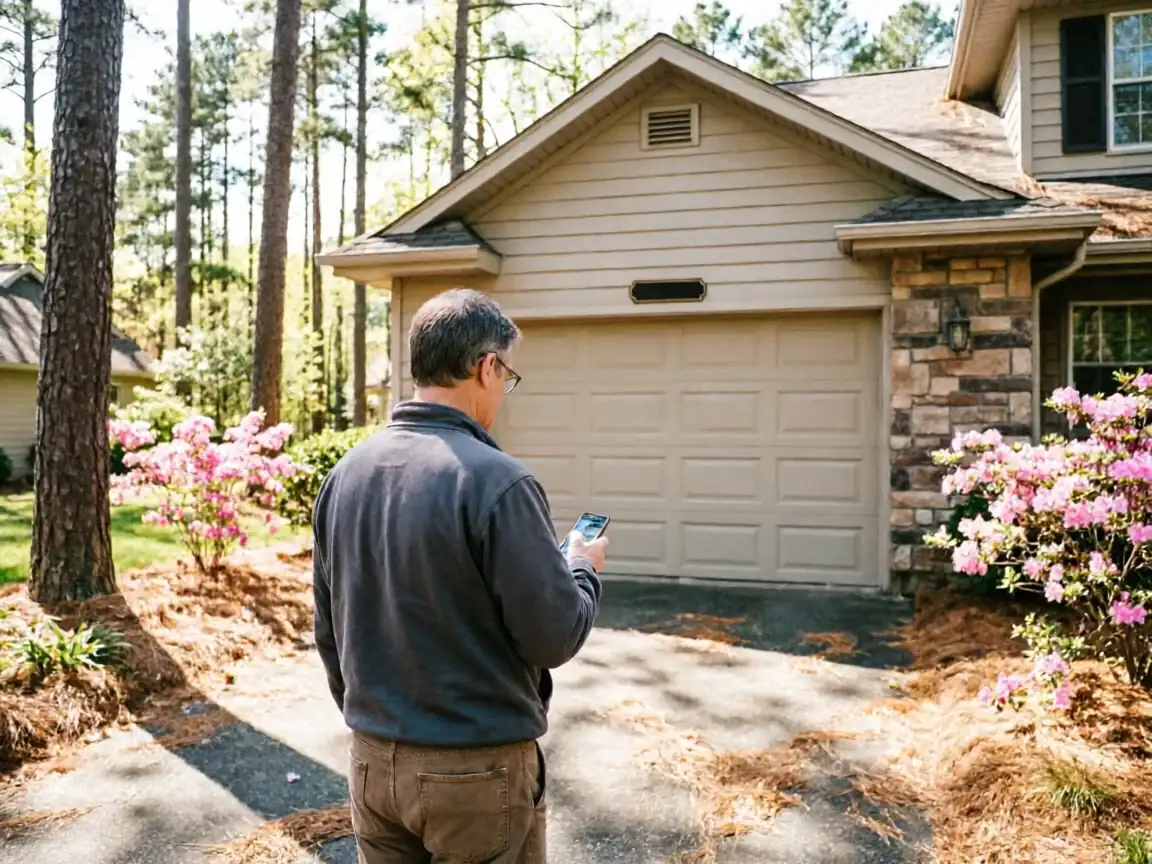
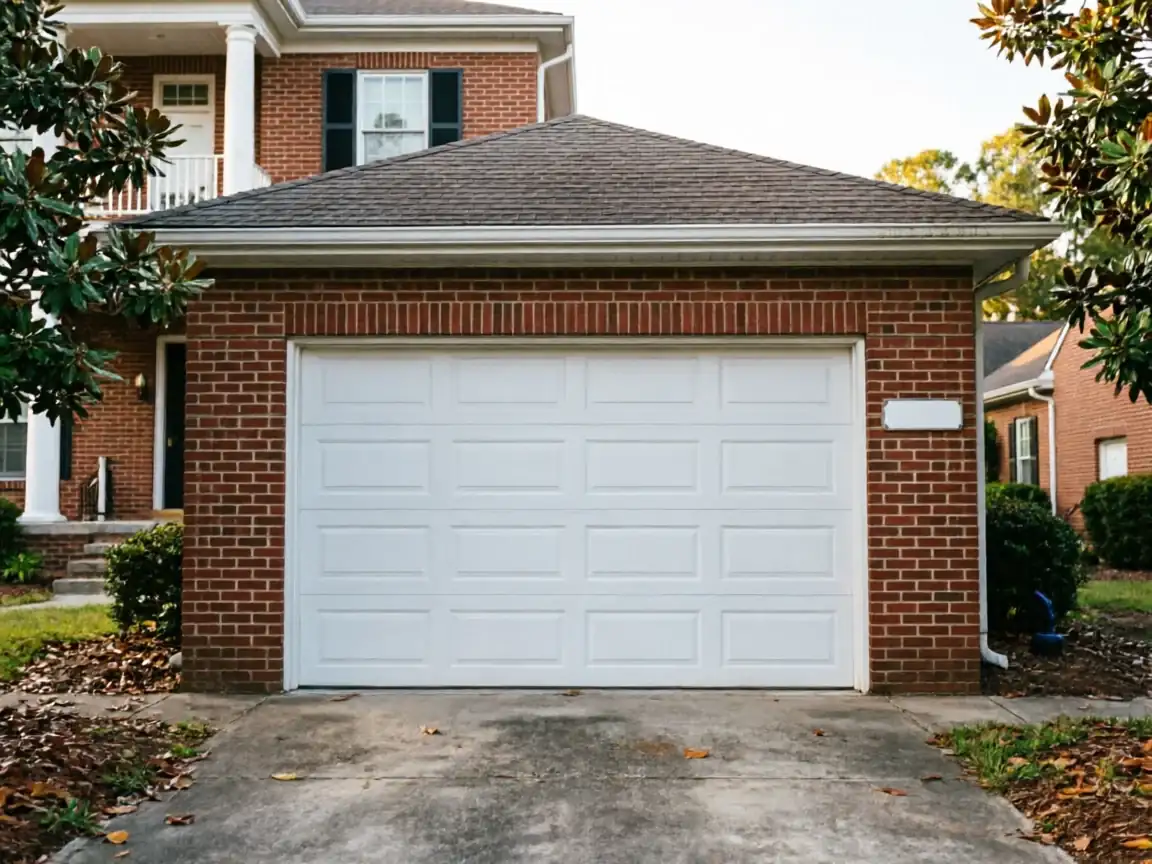
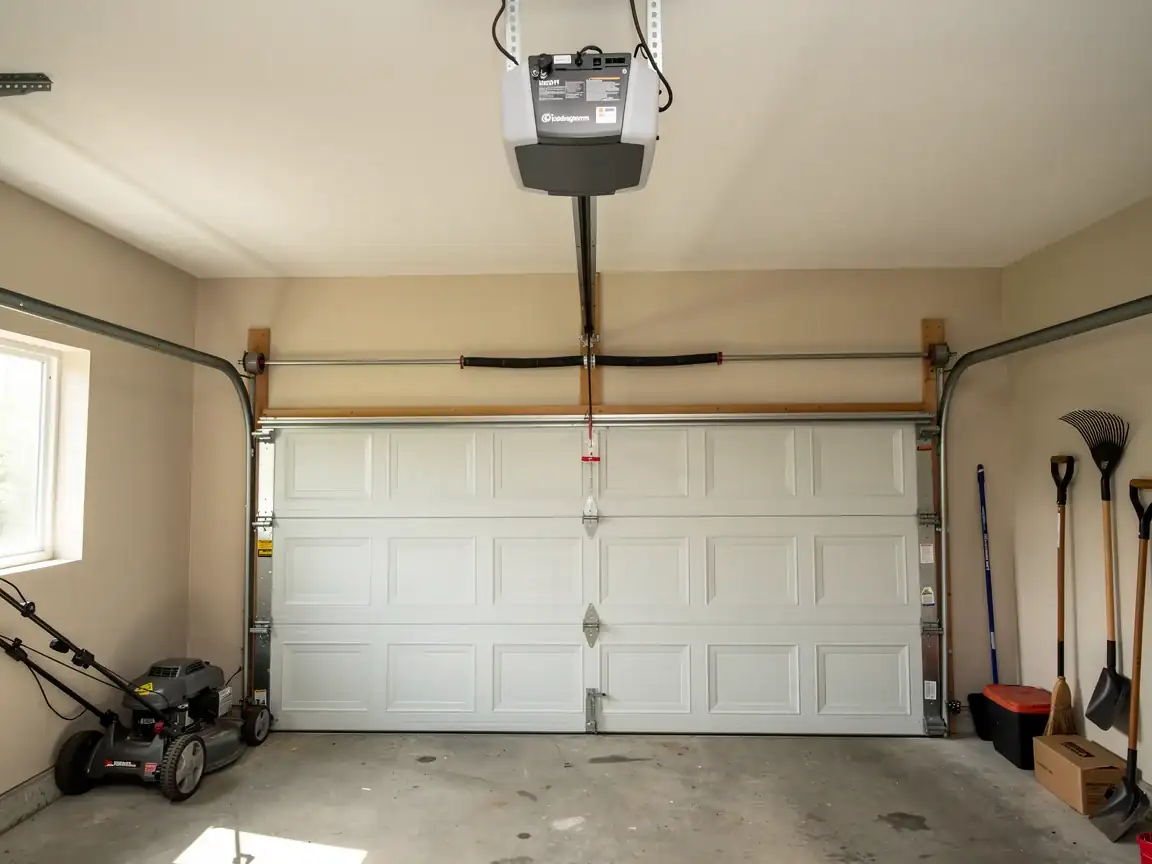
Franklin's homes mostly went up in 1966, which puts the town at the early edge of the service area's broader 1966-to-1992 build window. That means a fair share of the doors we see here still run on extension springs mounted along the horizontal track, not the torsion bar setups that became standard later. We carry replacement extension springs, safety cables, and the galvanized rollers that wear out on doors this age, since the originals are long past their rated cycle count by now.
We also stock weatherstripping and bottom seals sized for older single-layer steel panels, which don't match the dimensions of newer insulated doors. What we don't carry on the truck is obsolete hardware for doors that have been discontinued for decades - if a panel or track bracket is no longer made, we'll tell you that up front instead of promising a part we can't get.
Doing It Yourself
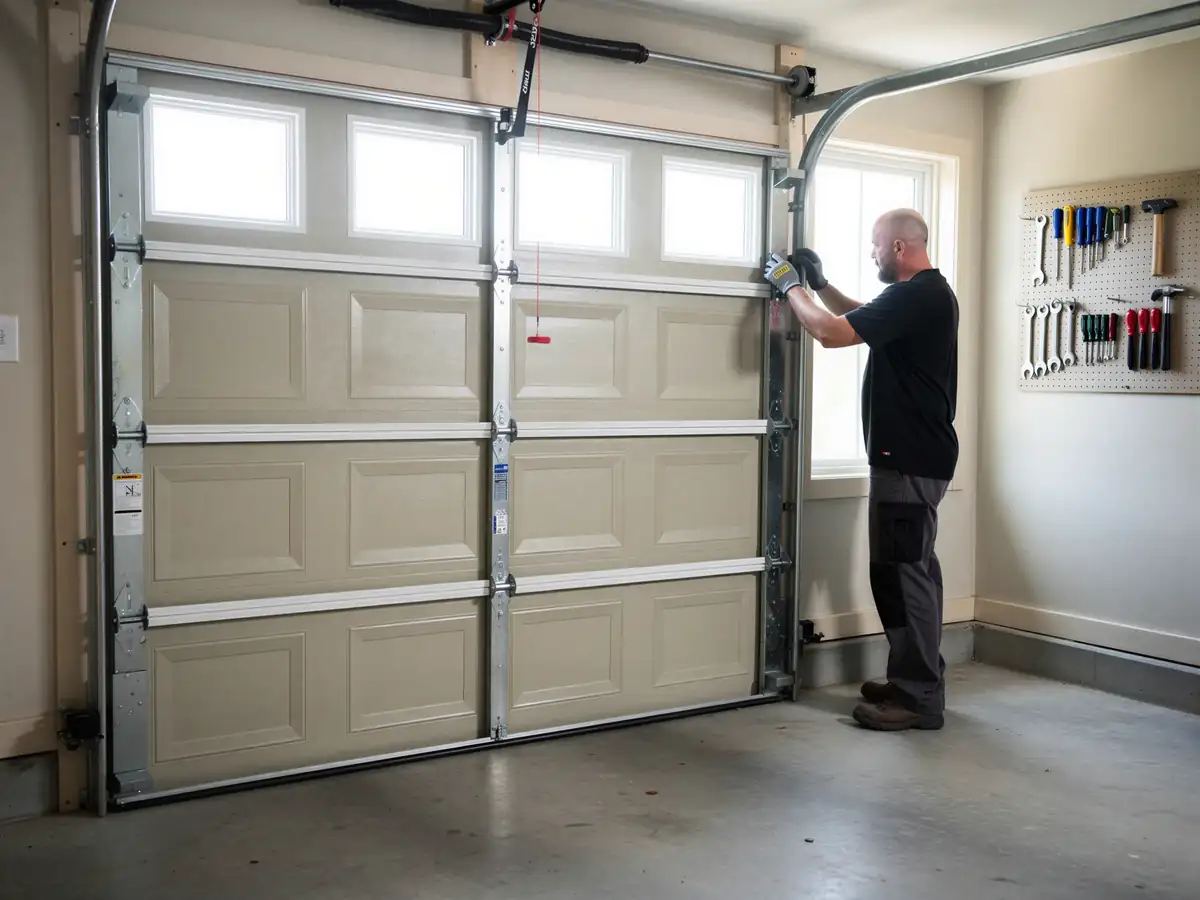
There's real maintenance a homeowner can do between visits: wipe down and lightly lubricate the rollers and hinges, check that the auto-reverse still trips when something's under the door, and look at the cables for fraying near the drum. None of that requires a technician.
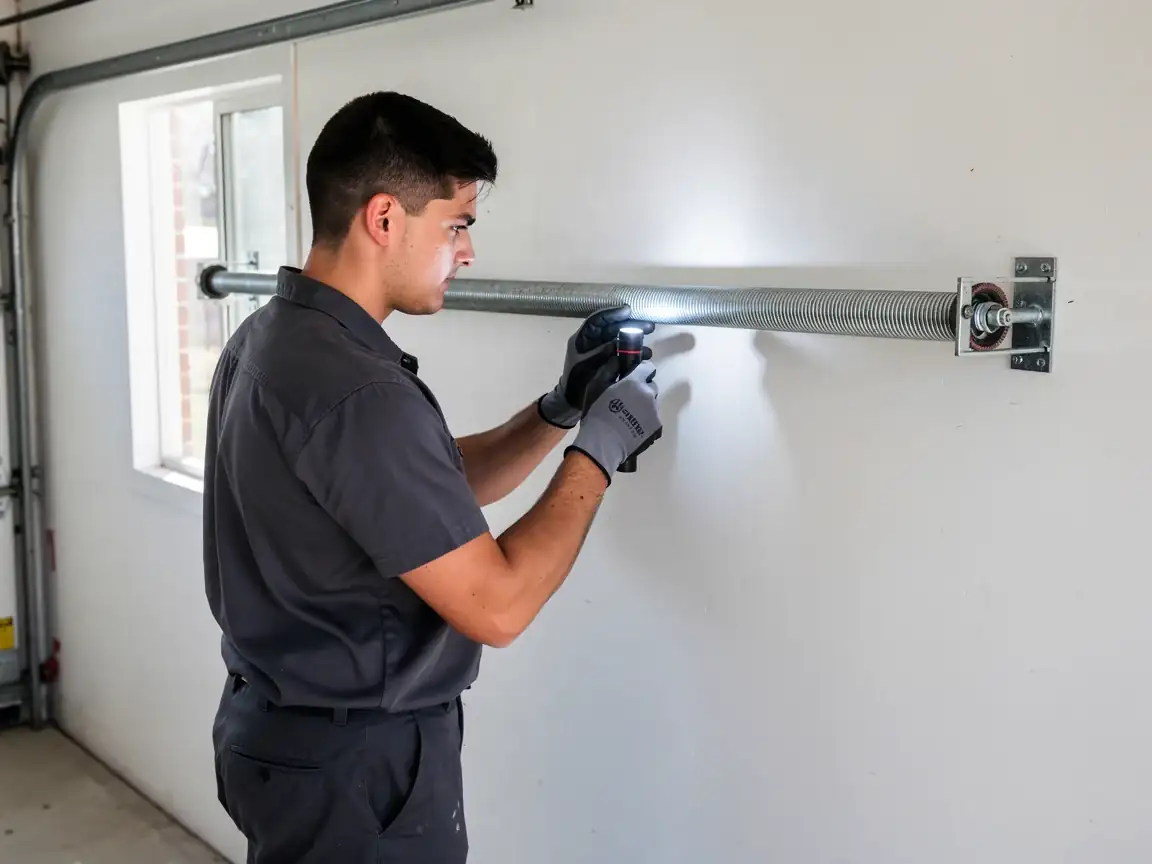
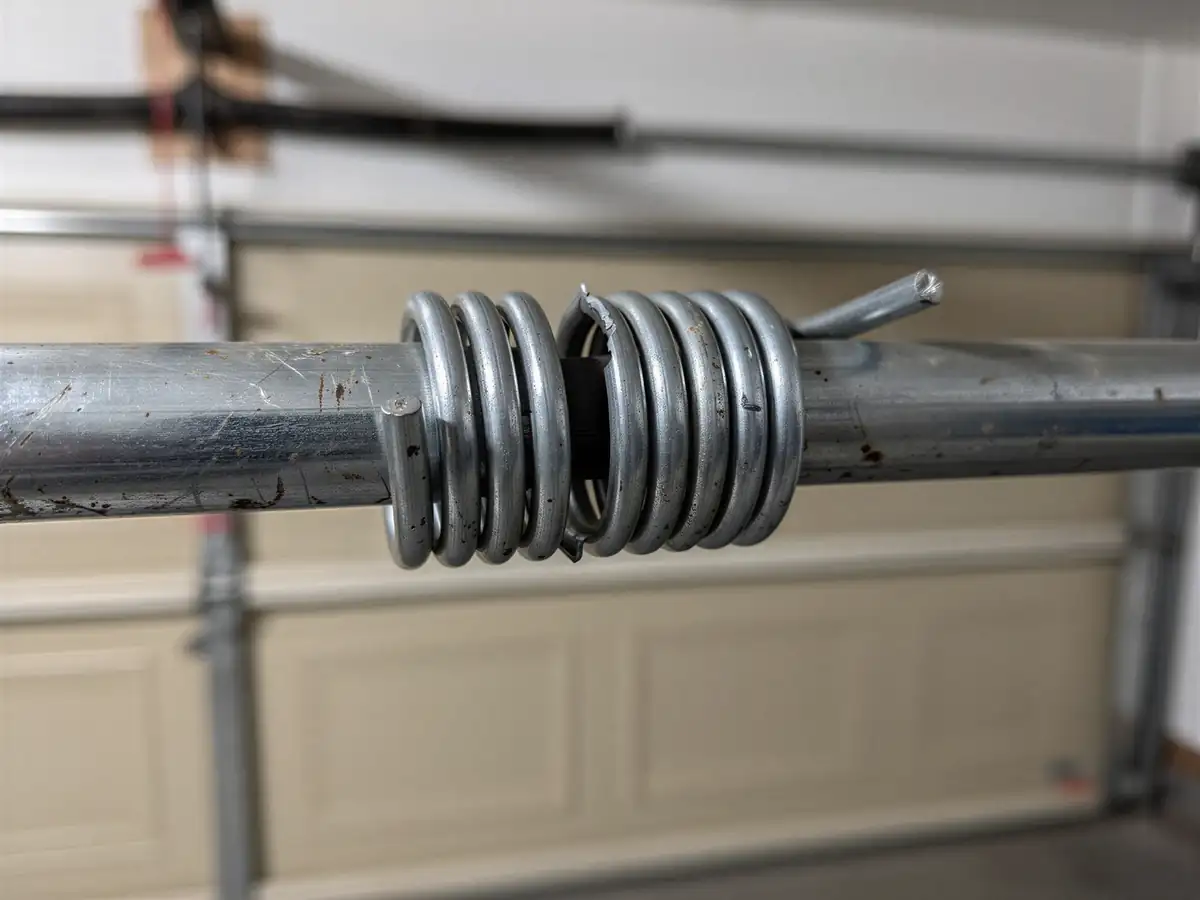
What you shouldn't touch is the spring itself, extension or torsion. On a door this old, the spring is likely well past its rated cycle life, and a spring under tension that lets go can do real damage to a hand or a face. If you're not sure how old your spring is or what type it is, that's the one call worth making before you try anything yourself. Given how many Franklin doors still run original extension springs from the 1966-1992 era, this isn't a hypothetical risk - it's the most common injury call we get for this kind of door.
What the Repair Takes
Because we're running out of Suffolk, about 17 miles from Franklin
We schedule maintenance here as a planned stop rather than a same-day drop-in. That's not a response-time promise - it's just how the route works, and it's worth knowing before you call expecting someone within the hour.
- 17 miles
Once we're on site, a standard tune-up on an older door runs longer than on a newer one
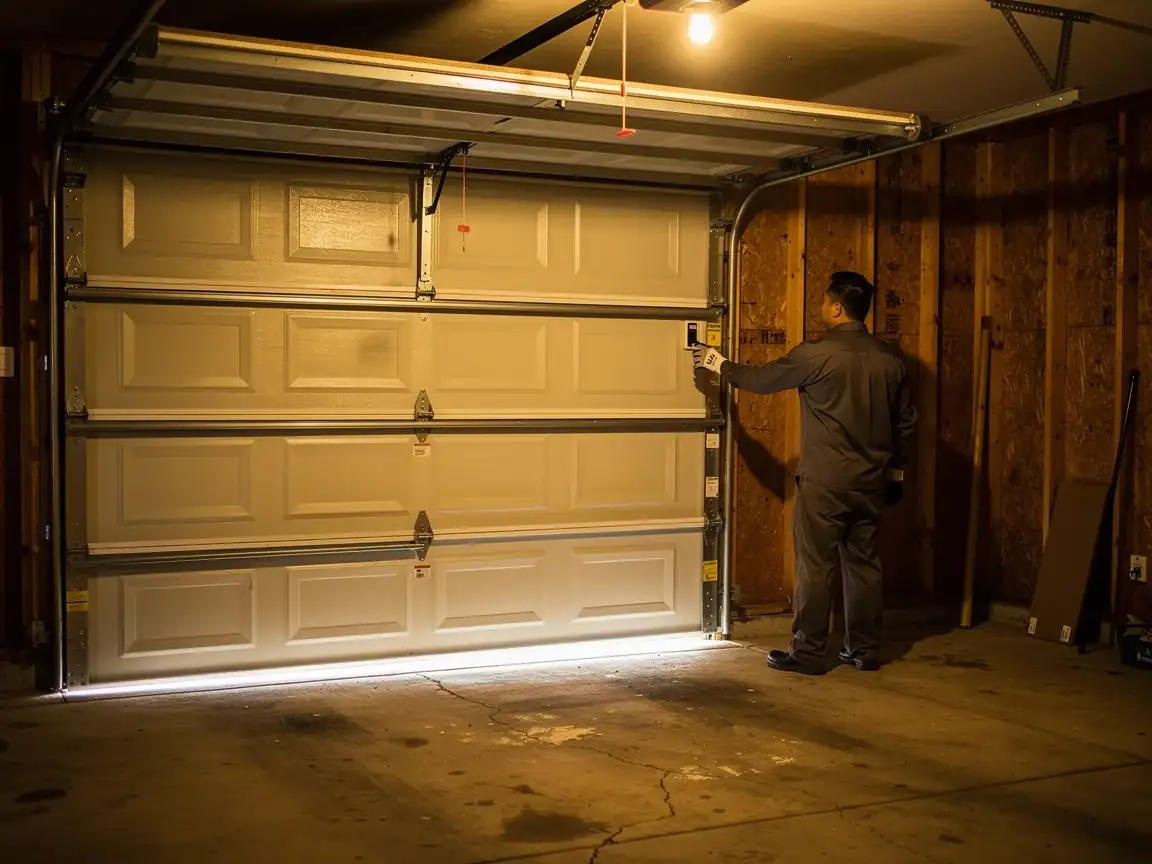
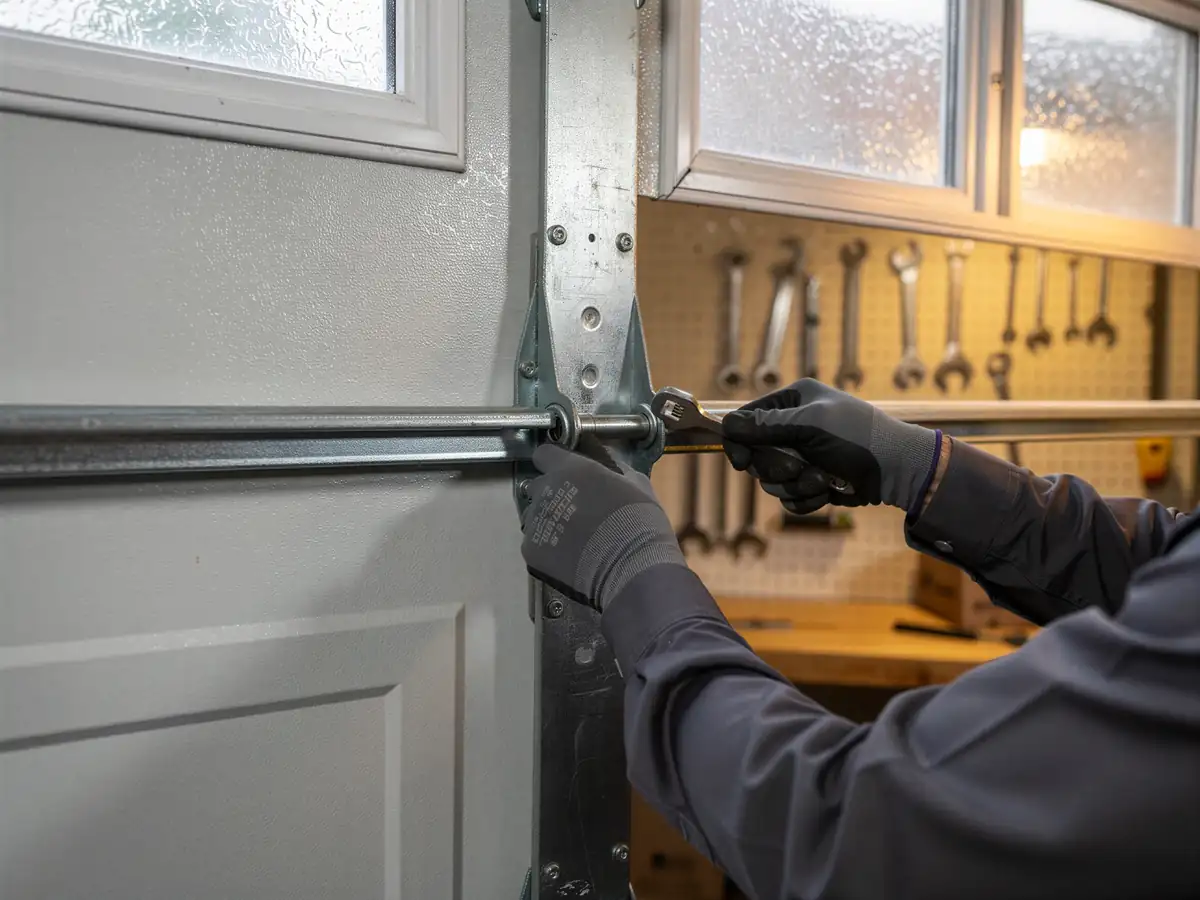
Full hardware inspection, lubrication, balance test, and a check of the opener's force settings, which drift over decades of use. If we find a spring or cable that's near failure, we'll usually have the part on the truck, since extension springs and rollers for this era are common stock for us. A track alignment issue on a door this old sometimes means the whole track needs replacing rather than adjusting, because the mounting holes have worn oversized.
What Can Go Wrong
The most common fault we see on Franklin's older doors is a frayed or snapped safety cable on an extension spring setup - original systems from the 1966 era often didn't have one installed at all, since the requirement came later. Without it, a broken spring can send itself across the garage instead of staying contained.
The moderate-cold winters here also take a toll on the grease in an original chain-drive opener. It gums up by midwinter if nobody's serviced it since spring, which shows up as a door that stutters partway open. Rollers on doors this old are also frequently steel rather than nylon, and they'll eventually groove the track, causing the door to bind. None of these are emergencies if caught early - they're exactly what a maintenance visit is for.