Doing It Yourself
Smithfield's housing stock centers on 1992
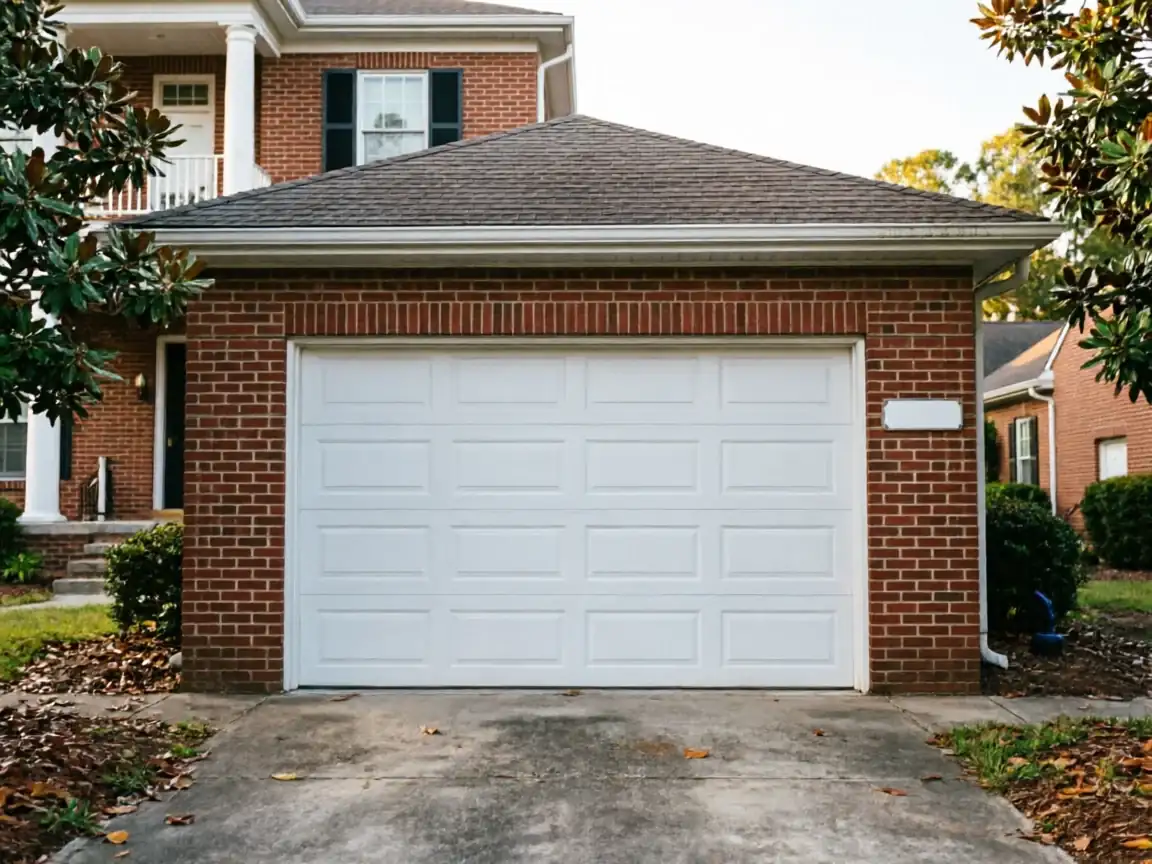
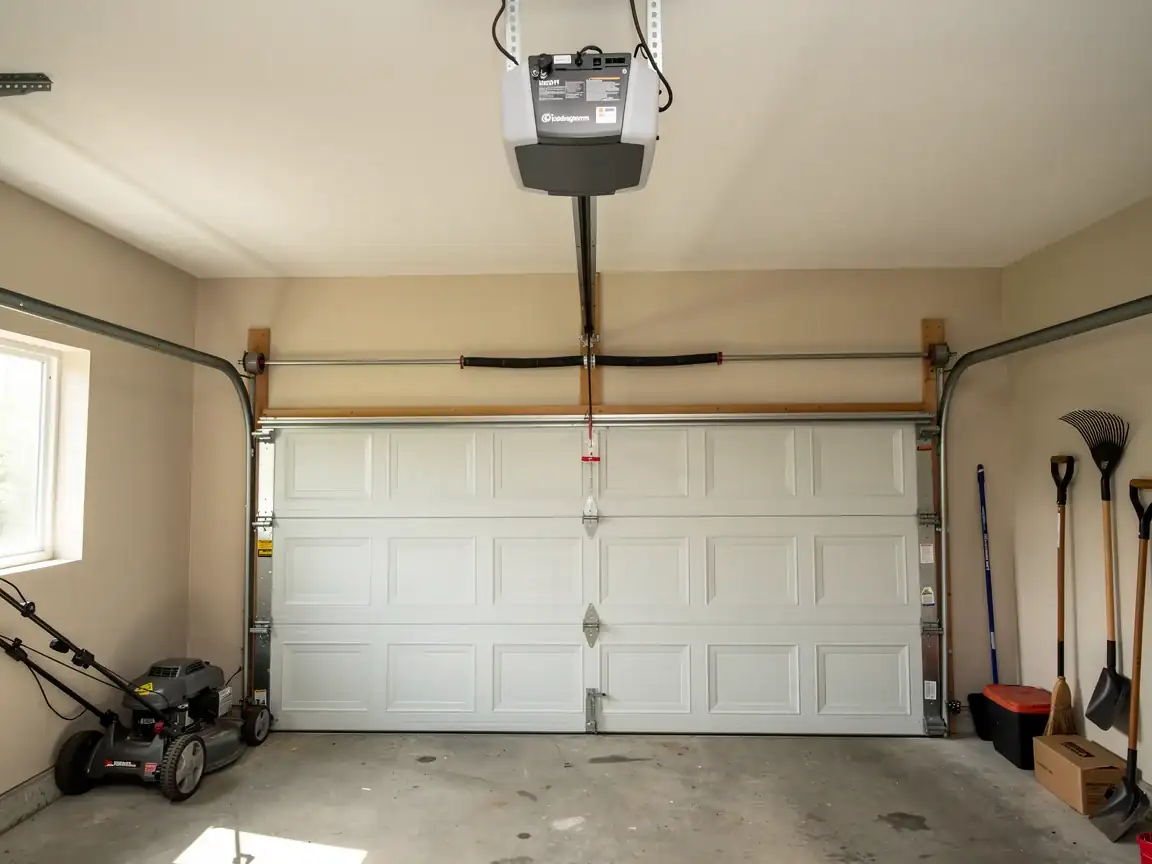
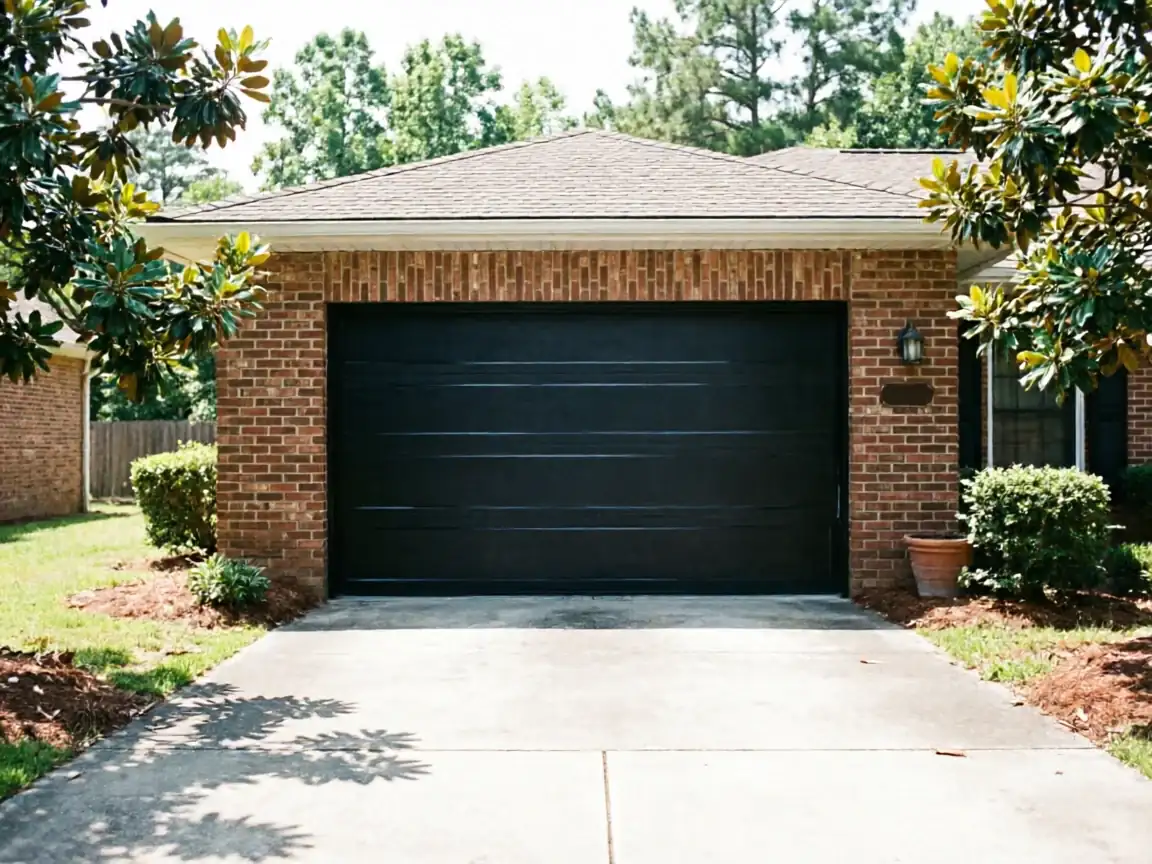
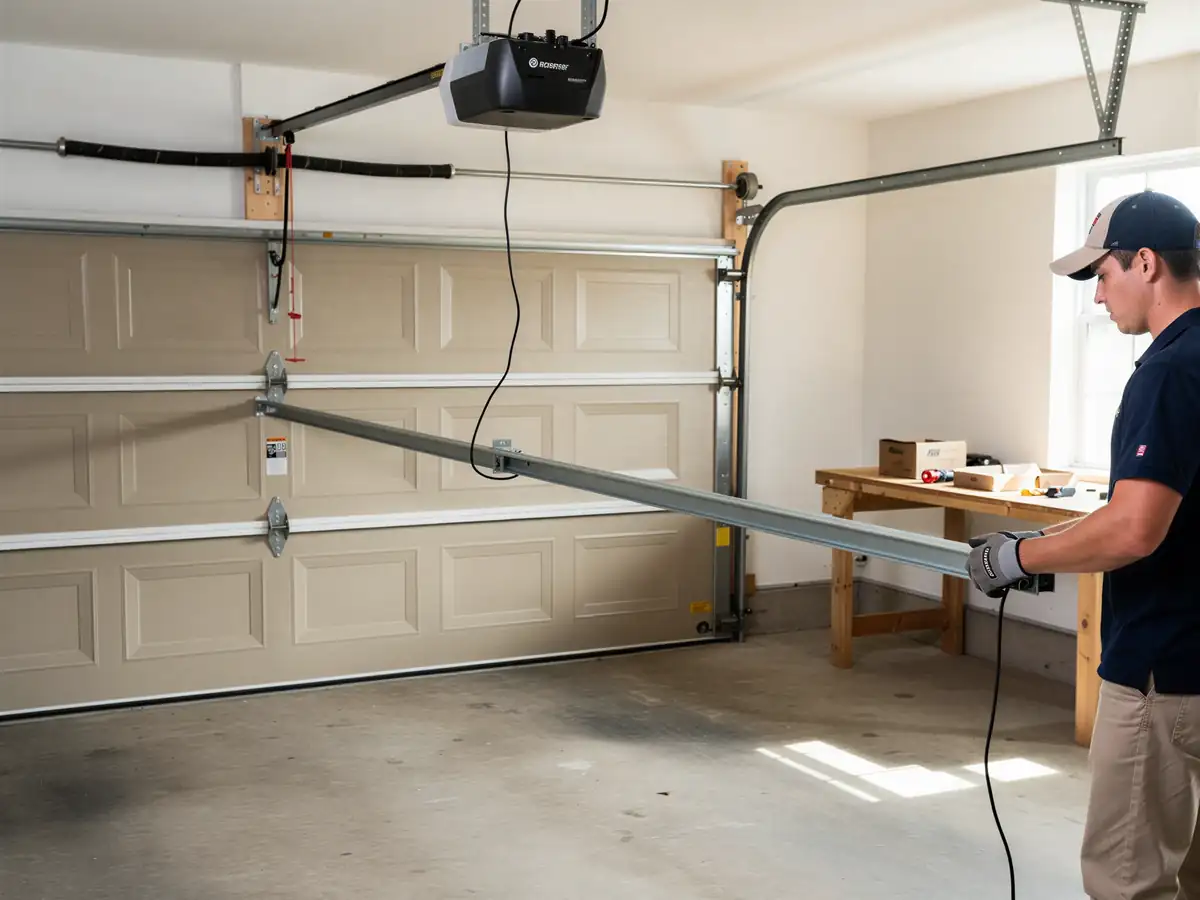
Later than the service area's overall 1966-1992 span. That matters for what's hanging in these garages: steel sectional doors on roll-formed galvanized track, usually two-car openings around 16 feet wide, not the heavier single-piece wood doors you'd find on an older street. Lighter panels, lighter rollers, and track that's thinner gauge than what gets installed today.
- 16 feet
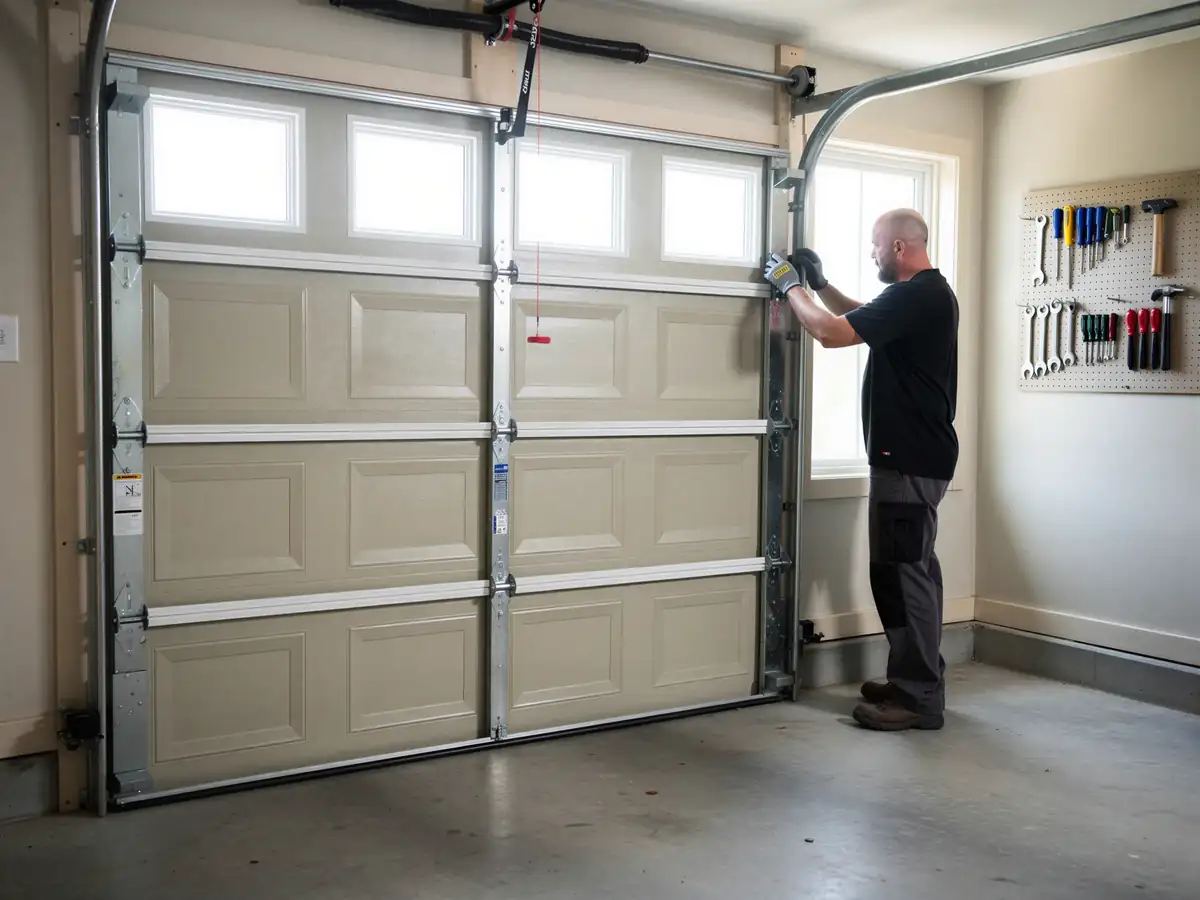
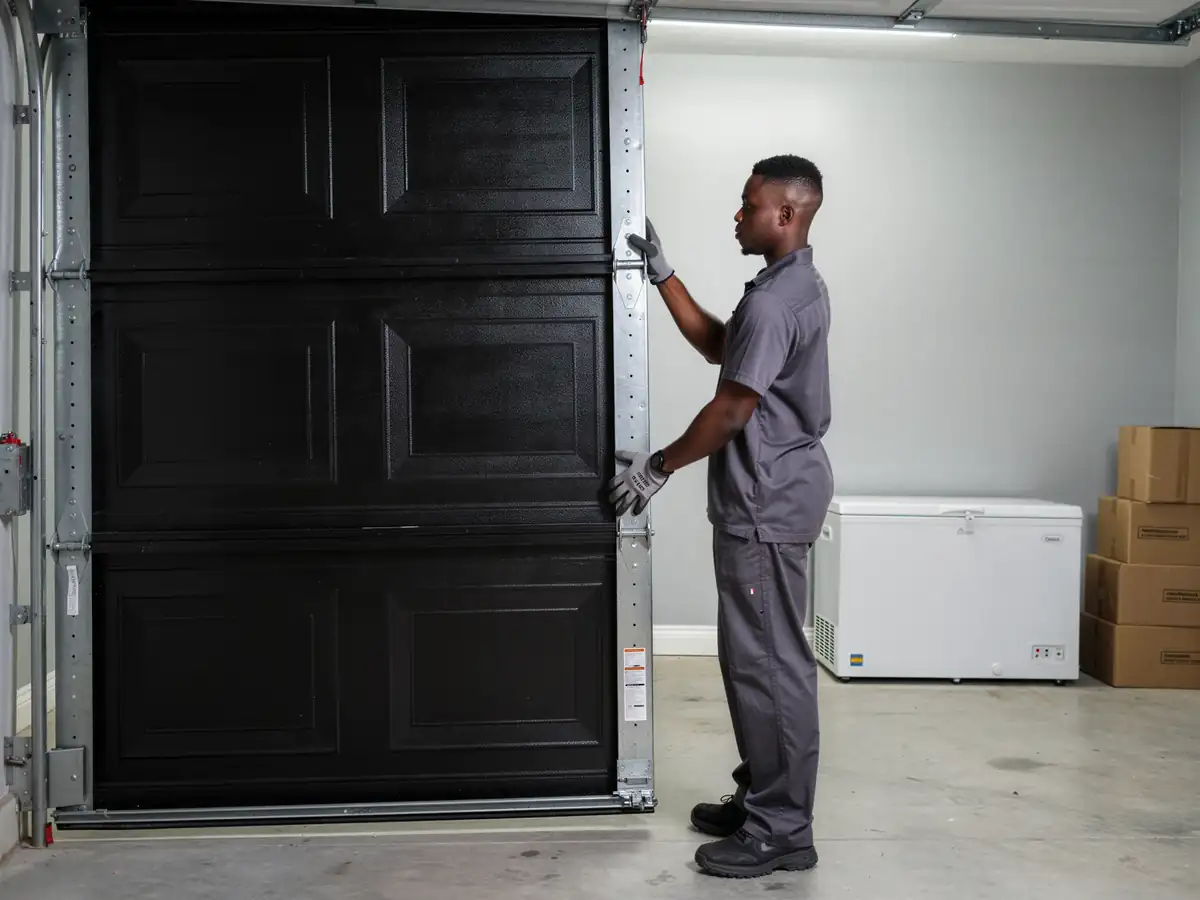
When one of these doors jumps track, the instinct is to grab the bottom panel and muscle it back into the channel
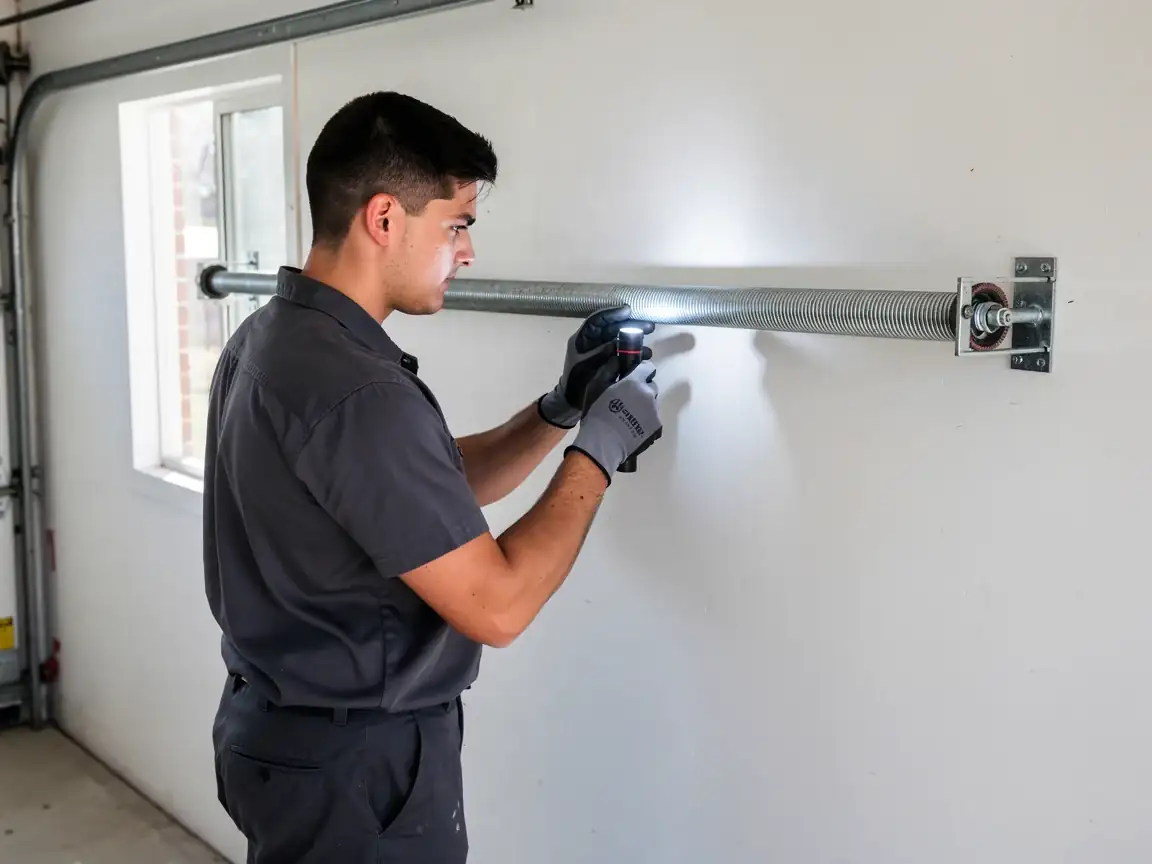
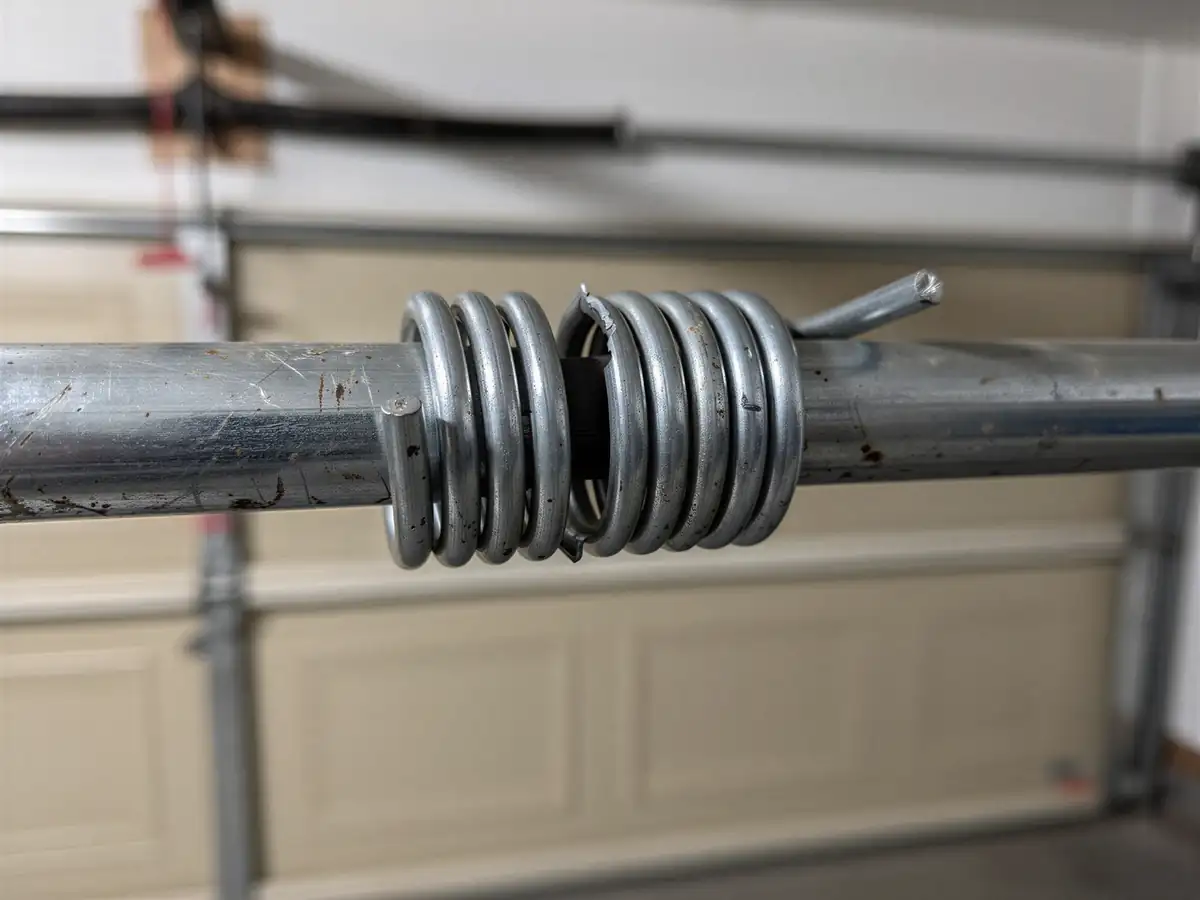
Don't. A door that's off-track on one side is almost always still under spring tension, and a 1990s torsion spring holding up a steel sectional door has enough stored force to break a finger or worse if it lets go while you're leaning into the track. If the door came off on both sides, the cable has likely snapped or the bottom bracket has pulled loose from the panel - either way, the fix starts with locking down the tension before anyone touches the track.
What you can safely check
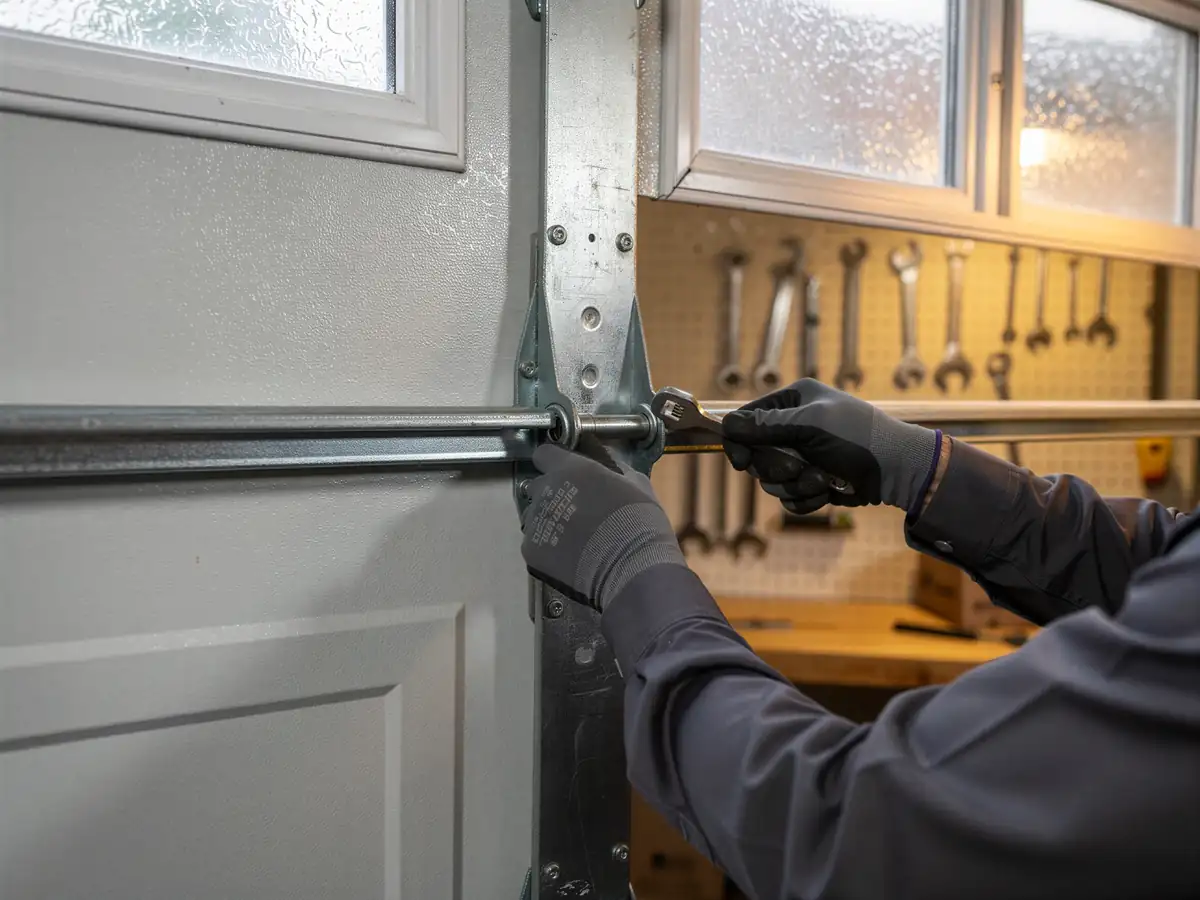
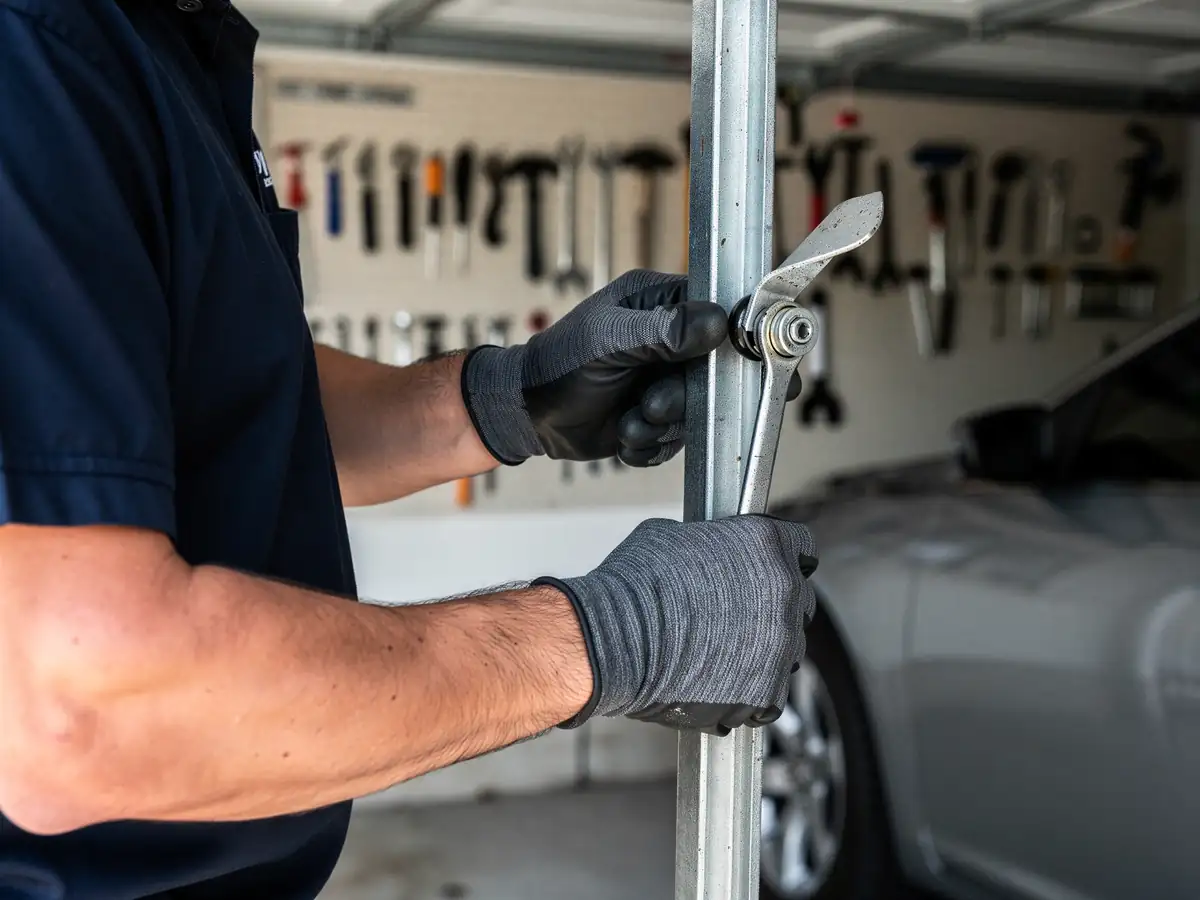
Whether the track bolts into the wall studs are loose, and whether a roller has simply worn through and dropped out of the channel. Both are visible without removing panels. Beyond that, call it in.
The honest limit here
If the track itself is bent rather than just knocked loose, straightening rarely holds on 30-year-old galvanized channel. Replacing the section is usually the better money.
How Long It Takes
Most off-track calls on a door this age are a two-part job: re-seat the rollers in the channel, then check why it jumped in the first place. On a steel sectional door with roll-formed track - the standard here - that's usually a cable, a bent hinge, or a roller bracket that's worked loose over three decades of use.
If the track itself needs replacing because it's bent rather than just misaligned, the job runs longer, since new track has to be cut and leveled against a wall and header that have settled a bit over 30-plus years. That's common enough in houses from this era that it's worth mentioning up front rather than promising a quick fix and then finding the real problem once the panel's off.
We travel from Suffolk, 19 miles out, which is the longest run of the towns we cover. That distance doesn't change how long the repair itself takes once a tech is on-site, but it's part of why we ask what the door is doing - jumped on one side, jumped on both, door won't move at all - before the truck leaves, so the right parts are already on board.
Getting It Booked In
Tell us what the door is doing before the truck gets there: did it come off the track on one side or both, is it stuck open or stuck closed, and can you still hear the opener trying to run it. Those answers change what rides in the truck, which matters more here than on a closer job, since a second trip over 19 miles costs real time.
We don't keep a branch in Smithfield - every job here is routed from Suffolk, so there's no walk-in counter to swing by. A phone call with a clear description of what the door is doing gets you further than a same-day drop-in request.
If the door is a known model - steel sectional, standard 7-foot height, roll-formed track - parts are usually on the truck already. If it's been modified or retrofitted with newer hardware on an older frame, that's worth mentioning when you call, since it may need a part ordered ahead rather than carried as stock.
What Causes It Around Here
The service area sits in a cold-moderate climate band
And that swing between summer heat and winter cold is harder on steel track and galvanized fasteners than people expect. Metal track expands and contracts season to season, and on a door installed around 1992, those mounting bolts have had thirty-plus winters to work loose a fraction of a turn at a time. Eventually a bracket shifts enough that a roller rides the edge of the channel instead of the center, and one hard open or close knocks it clean off.
The other common cause here is a bent track from a vehicle bumper tap
With a two-car steel sectional door at the size common in Smithfield's housing stock, the track sits close to where a car's mirror or bumper can catch it pulling in at an angle. A single hard contact can bend the channel just enough that the rollers can't track straight anymore.
With 3,453 households in Smithfield against a median income of $110,182
Noticeably higher than the broader service area's $65,321 - we see more doors here that have had an opener or hardware upgrade retrofitted onto the original 1992 frame, which sometimes introduces its own alignment issues if the retrofit wasn't matched to the original track spacing.
- 3,453 households